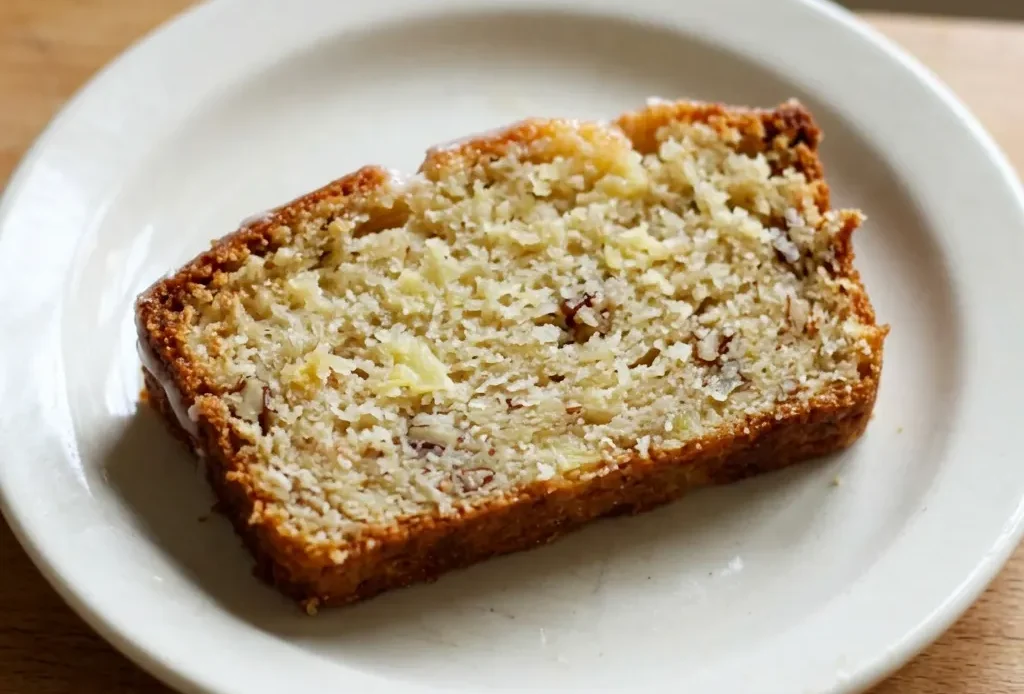
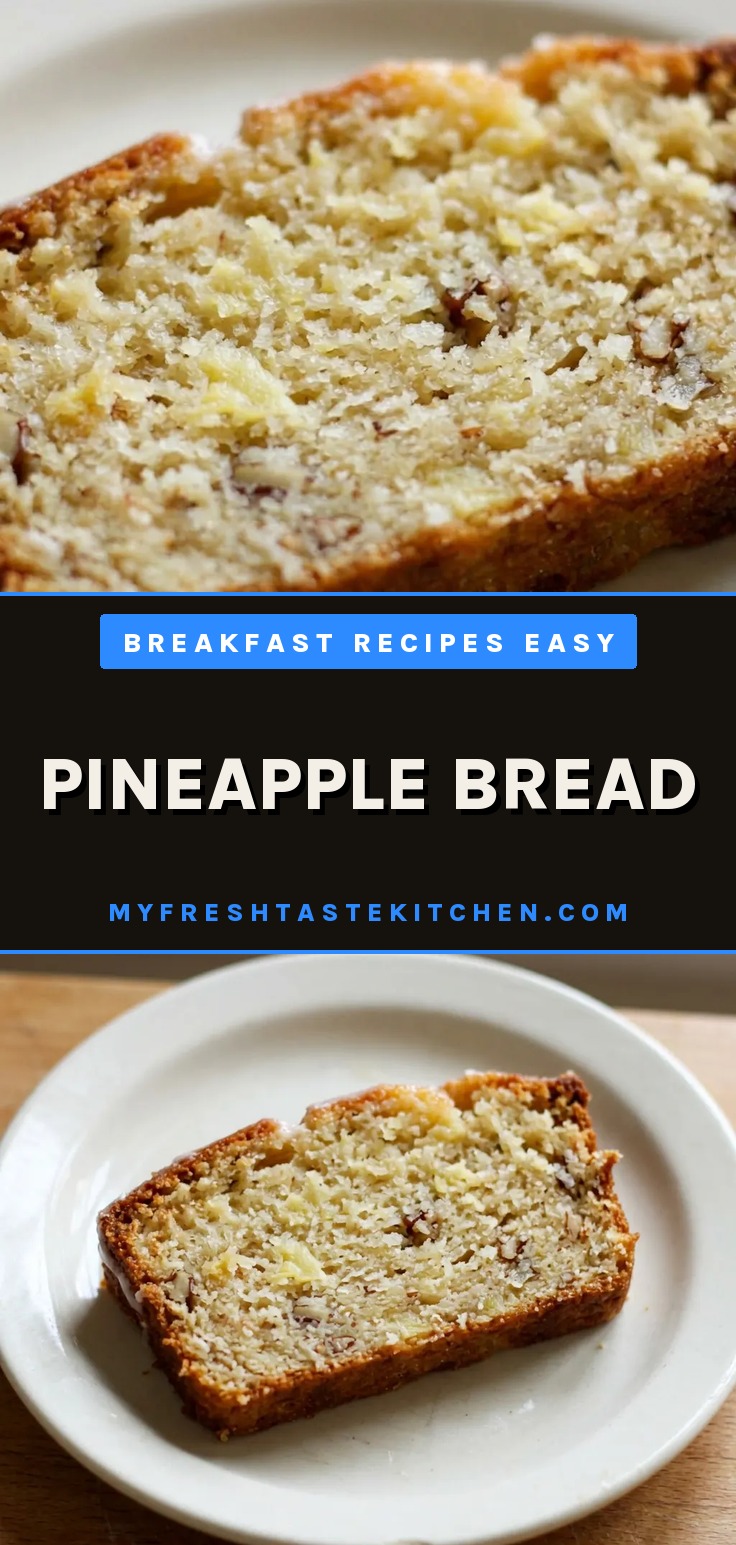
The trick to a tender, not-gummy pineapple bread is in the can: dump all that crushed pineapple and its juice straight into the batter. No draining, no fuss. The juice replaces the usual milk or buttermilk, and the pineapple pieces keep every slice moist for days.
Overmixing is the real danger here, stir just until the flour disappears, or you’ll get a tough, rubbery crumb. It’s a forgiving recipe otherwise, and the result is a breakfast loaf that’s sweet, soft, and stays that way long after it comes out of the pan.
I once stirred that batter like I was punishing it, and the loaf came out tough enough to bounce. Accidentally under-mixed the next batch and it was perfection.
Why use undrained crushed pineapple?
The can of crushed pineapple with its juice replaces the liquid you’d normally add, milk or buttermilk. That juice carries sweetness and acidity into the batter, keeping the crumb tender.
The pineapple pieces themselves add moisture and pockets of flavor throughout the loaf. If you drained the pineapple, you’d lose that liquid, and the bread would come out drier and less aromatic. The juice is doing real work here: it contributes to the soft, almost silky texture that makes this quick bread a morning favorite.
So don’t drain it, just dump the whole can in.
Should you use oil or butter?
This recipe calls for vegetable oil because oil creates a consistently moist, tender crumb that stays soft for days. Butter would add a richer flavor, but it also makes the bread denser and it stales faster. For a breakfast bread meant to be eaten over several days, oil is the practical choice.
The crumb stays springy, the loaf doesn’t dry out as quickly, and you don’t miss the butter’s richness when the pineapple’s sweetness is front and center. If you swap in melted butter, expect a slightly tighter texture and a shorter shelf life.
What happens if you overmix the batter?
Overmixing develops gluten, and gluten makes bread tough. This quick bread relies on a tender, almost cake-like crumb, which comes from stirring the wet and dry ingredients only until they’re just combined.
A few streaks of flour are fine; lumps will bake out. The pineapple’s extra moisture can hide the fact that you’ve overworked the batter, so you might not notice until you bite into a dense, rubbery slice.
Trust the visual cue: stop mixing the moment the dry flour disappears.
Adding coconut or nuts: worth it?
Shredded coconut brings a pleasant chew and a tropical flavor that plays off the pineapple. Chopped nuts like walnuts or pecans add crunch and a nutty contrast to the soft crumb.
Both are optional, you can leave them out and the loaf is still great. But if you want a little extra texture or a flavor twist, stir in one of them at the end.
They don’t change the base recipe’s ratios, so you can decide on a whim without adjusting anything else.
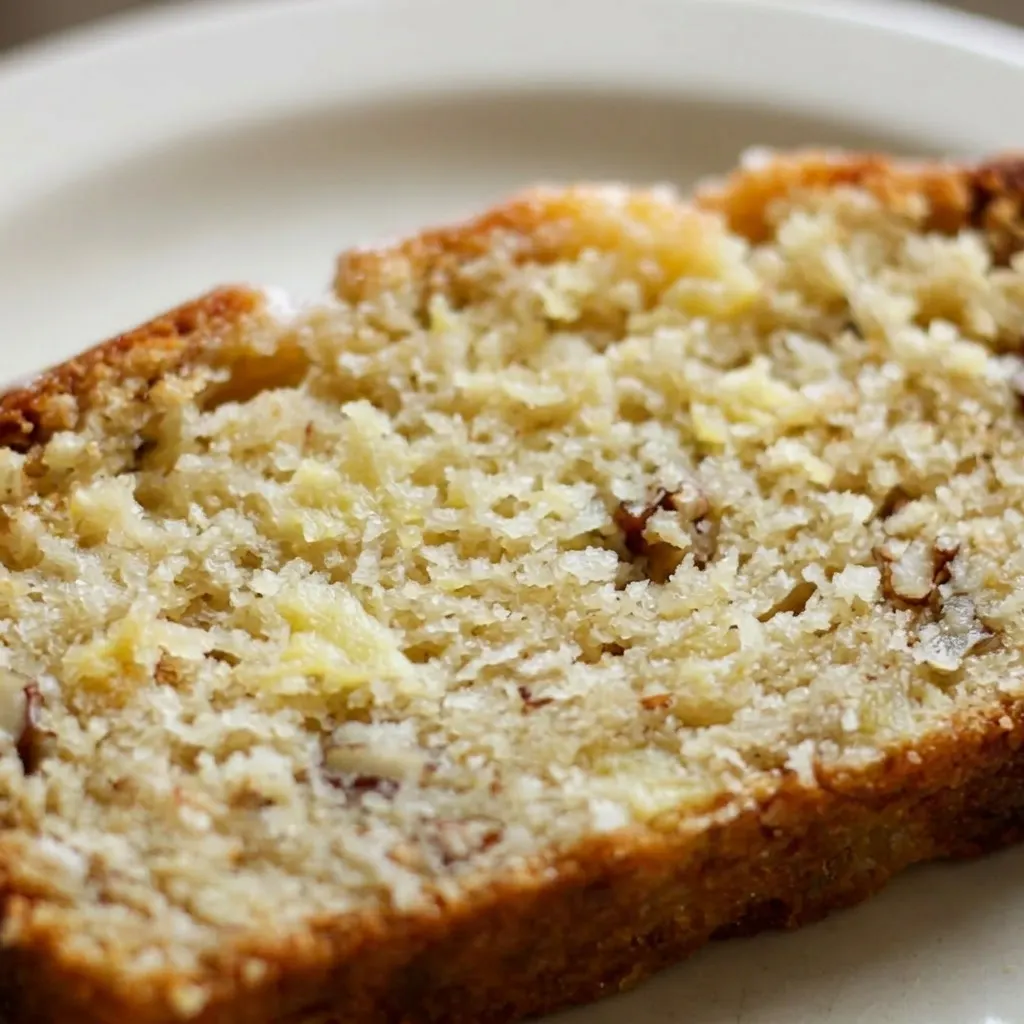
Prep: 15 min · Cook: 1 hr 5 min · Total: 1 hr 20 min · Servings: 6 · Calories: 180 kcal
A few things about the ingredients
Crushed pineapple: Buy the kind packed in juice, not syrup. Use the whole can with its liquid.
Vegetable oil: Oil keeps the crumb tender and moist for days. Butter is an option but it stales faster.
Shredded coconut or nuts: Both are optional. Coconut adds chew, nuts add crunch. Stir in one or the other at the end.
How to make pineapple bread step by step
Prep the pan and oven
Heat oven to 350°F (175°C). Grease a 9×5-inch loaf pan or line it with parchment, the bread releases cleanly without sticking.
Mix dry ingredients
Whisk flour, baking powder, salt, and sugar in a large bowl. Whisking aerates the flour and breaks up any lumps, giving a lighter crumb.
Combine wet ingredients
In a separate bowl, whisk eggs, oil, vanilla, and the entire can of crushed pineapple with its juice. The mixture will look thin and bubbly, that’s fine.
Fold wet into dry
Pour the wet mix into the dry. Stir with a spatula just until the flour disappears, a few streaks are okay. Stop immediately; overmixing will toughen the bread.
Add optional mix-ins
If using coconut or nuts, fold them in gently. They should be evenly distributed without overworking the batter.
Fill the pan
Scrape the batter into the prepared pan and spread it level. The batter will be thick but pourable; don’t smooth it too much.
Bake until done
Bake 55 to 65 minutes. At 50 minutes, start checking: insert a toothpick into the center, if it comes out clean or with a few moist crumbs, it’s done. If the top darkens too fast, tent loosely with foil.
Cool and slice
Let the bread cool in the pan for 10 minutes, then turn it out onto a wire rack. Cool completely before slicing for clean cuts.
Pineapple Bread
Ingredients
- 2 cups all-purpose flour 250 g
- 2 teaspoons baking powder
- 1/4 teaspoon salt
- 2/3 cup sugar 133 g
- 2 large eggs
- 1/2 cup vegetable oil 120 ml (or melted butter)
- 1 teaspoon vanilla extract
- 1 can crushed pineapple with juice 8 oz / 227 g – do not drain
- Optional: shredded coconut or chopped nuts 1/2 cup (45 g) shredded coconut or 1/2 cup (60 g) chopped nuts (like walnuts or pecans)
Instructions
Preheat Oven and Pan:
Heat oven to 350°F (175°C). Grease lightly or line a 9×5-inch loaf pan with parchment.Whisk Dry Ingredients:
In a large bowl, combine flour, baking powder, salt, and sugar with a whisk.Mix Wet Ingredients:
In a separate bowl, whisk eggs, oil, vanilla, and the full can of crushed pineapple with its juice.Combine Wet and Dry:
Add the wet mix to the dry ingredients. Stir only until incorporated—avoid overmixing. If desired, fold in coconut or nuts.Transfer Batter to Pan:
Transfer batter to the prepared pan and level the surface.Bake Until Golden:
Bake for 55 to 65 minutes, until a toothpick inserted in the center emerges clean. If browning too quickly, loosely cover with foil for the final 15–20 minutes.Cool and Serve:
Allow to cool in the pan for 10 minutes, then move to a wire rack. Slice and serve warm or at room temperature.
Storage and Serving
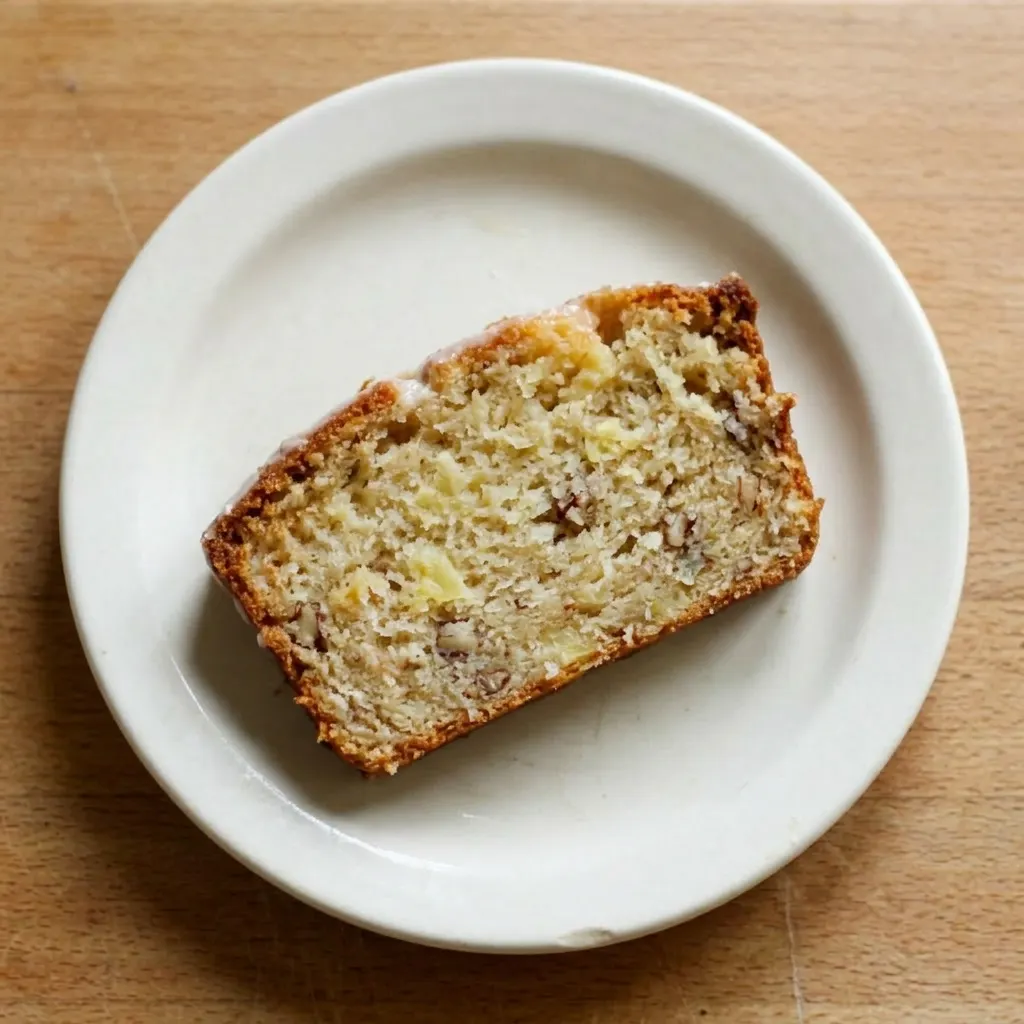
Cool the loaf completely before wrapping. Wrap tightly in plastic wrap and store at room temperature for up to 3 days. The oil and pineapple keep the crumb moist; after day 2, the top may feel slightly sticky but the texture remains tender.
For longer storage, wrap in plastic then foil and freeze for up to 3 months. Thaw overnight in the fridge or at room temperature for a few hours.
To refresh a stored slice, warm it in a 300°F oven for 5 to 10 minutes. Serve warm or at room temperature.
This bread is best within the first 2 days for the softest crumb. No finishing touch needed.
What to swap (and what to leave alone) in pineapple bread
Vegetable oil: Melted butter, same amount. Butter gives a richer, more buttery flavor but the bread will be a touch denser and stale faster. Still works, just expect a shorter shelf life.
All-purpose flour: Gluten-free all-purpose blend (with xanthan gum), same amount by weight. The bread will be more crumbly and slightly denser, but the pineapple’s moisture keeps it from drying out. Best for dietary needs, not for texture perfection.
Crushed pineapple: Do not swap, you need the whole can with juice. That juice is the only liquid in the batter. Drain it and you’ll get a dense, dry loaf that barely holds together.
No good substitute.
Tips
- If your oven runs hot, place the loaf pan on a baking sheet to insulate the bottom and prevent the crust from overbrowning before the center is done.
- To test for doneness, insert a toothpick into the center and also near the sides; if the center is still wet but the sides are dry, the bread may need more time but watch for overbaking the edges.
Frequently Asked Questions
Can I make pineapple bread ahead of time and does it freeze well?
Yes. Cool the loaf completely, wrap tightly in plastic wrap, and store at room temperature for up to 3 days.
For longer storage, double-wrap in plastic and foil and freeze for up to 3 months. Thaw overnight in the fridge or at room temperature for a few hours.
To refresh, warm slices in a 300°F oven for 5 to 10 minutes.
Why did my pineapple bread sink in the middle after baking?
Most likely the batter was overmixed, which developed too much gluten and weakened the structure. The moist pineapple batter can also make underbaking easy, if the center wasn’t fully set, it collapses as it cools. Check your oven temperature with an oven thermometer; an oven running cool can cause a dip.
Next time, stir just until the flour disappears and bake until a toothpick comes out clean or with a few moist crumbs.
How do I know when pineapple bread is done without overbaking?
Start checking at 50 minutes: insert a toothpick into the center, if it comes out clean or with a few moist crumbs clinging, it’s done. The bread’s top will be deep golden brown and the edges will pull away slightly from the pan. If the top darkens too fast before the center sets, tent loosely with foil for the last 15 to 20 minutes of the 55 to 65 minute bake time.
Is this pineapple bread similar to pineapple upside-down cake?
No, this is a quick bread, not a cake. There’s no caramelized sugar or fruit layer on the bottom. The texture is denser and more tender than a cake, and it’s meant for slicing and toasting.
The pineapple is mixed throughout the batter, not arranged as a topping. Think of it as a moist, fruity breakfast loaf rather than a dessert.