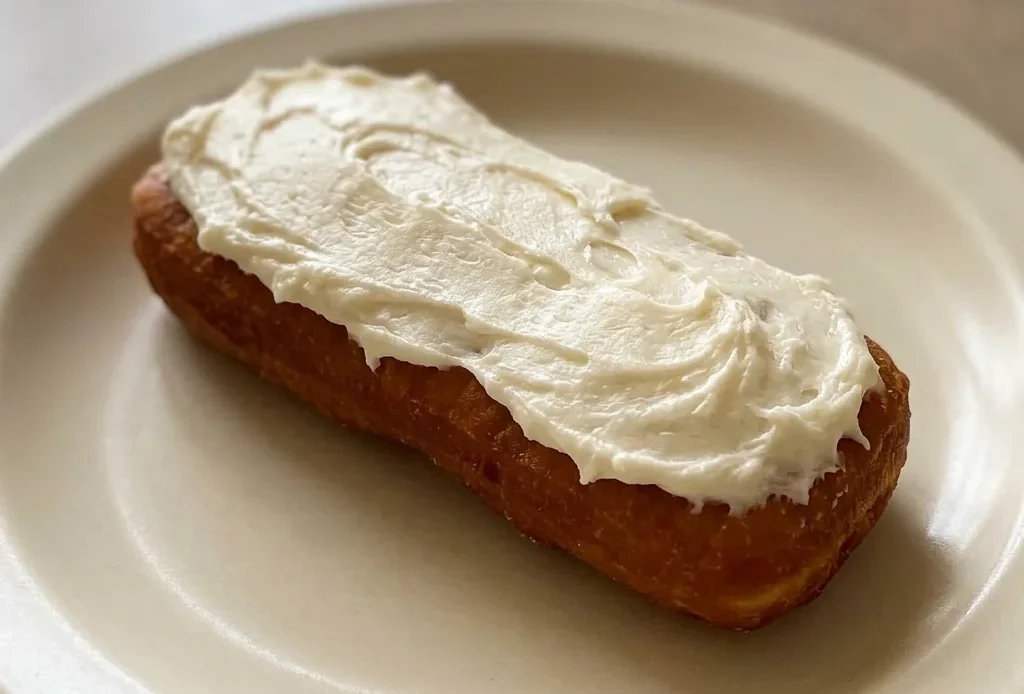
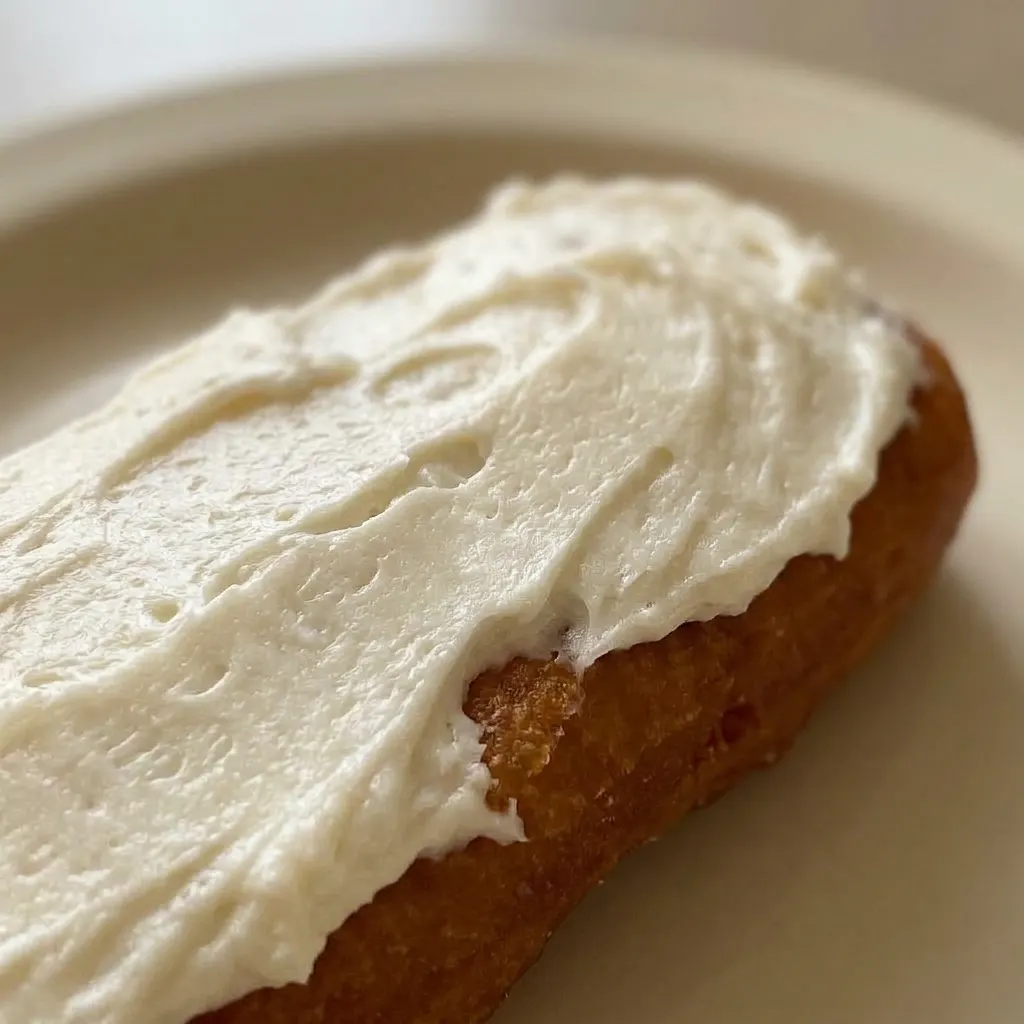
The first bite of a properly made Long John tells you everything: a thin, shatteringly crisp shell gives way to an airy, soft interior, then the butter glaze, soft, not hard, melts against your tongue. Getting that contrast right is the trick.
The dough has to rise twice, the oil has to stay at a steady temperature, and the glaze must set on cooled donuts or it slides right off. These amish long john donuts are a project, but the payoff is a nostalgic bakery treat that’s worth every minute.
Why a double rise with yeast?
Yeast wakes up in lukewarm water and milk, not hot, hot kills it. You’ll see bubbles after a few minutes if it’s active.
That first long rise, until the dough doubles, builds flavor and a sturdy gluten network. You’ll feel the dough spring back when poked.
After cutting, the second rise lets the shaped pieces puff up again. Without it, they’d fry dense and flat. The result is a donut that’s light inside, with an open crumb you can see when you tear one open.
What makes a butter glaze set without hardening?
You cream the butter with vanilla and some powdered sugar first, that aerates the base, so the glaze isn’t a solid slab. Adding milk slowly lets you control how thick or thin it runs. The butter stays soft at room temperature, so the glaze firms up but never gets brittle.
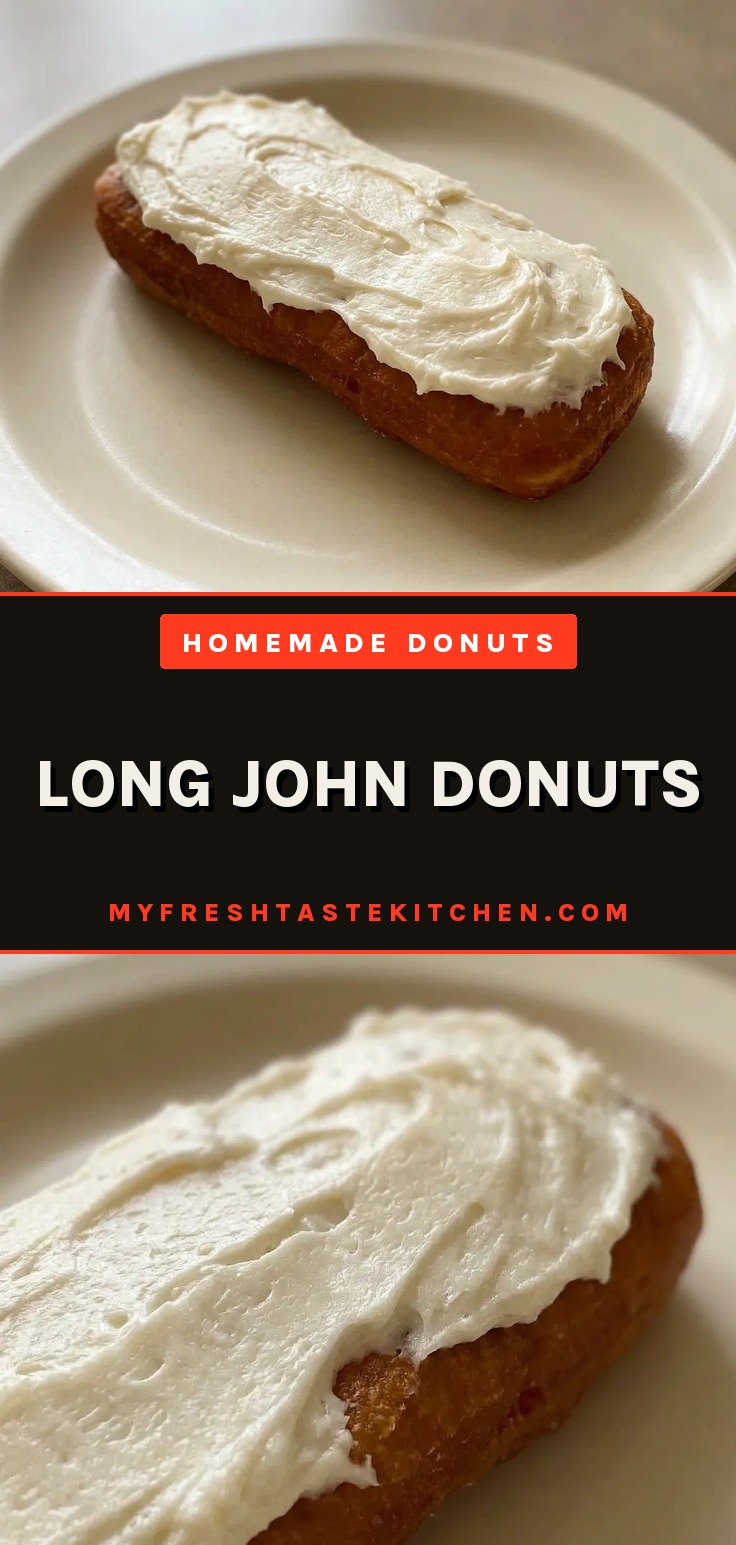
You spread it on cooled donuts; warm donuts melt the butter and the glaze slides right off, pooling on the plate. A properly set glaze looks smooth and matte, not glossy wet, and yields to a bite.
Bread flour gives these donuts chew, here’s why
Bread flour has more protein than all-purpose. When you mix and knead, that protein forms gluten, the elastic network that traps gas from the yeast.
You’ll feel the dough tighten as you work it, becoming smooth and stretchy. That strength keeps the donut from collapsing in the hot oil. The fried result has a satisfying chew, a little resistance when you tear it, but it’s not heavy or dense.
It’s the same reason bagels use high-gluten flour: structure without toughness.
Prep: 30 min · Cook: 20 min · Total: 2 hr 50 min · Servings: 24
Key ingredients for light, chewy long johns
active dry yeast: Buy fresh packets; check the date. Dead yeast won’t foam and your dough won’t rise.
bread flour: Use bread flour, not all purpose. The higher protein gives these donuts their characteristic chew.
margarine: Use stick margarine, not tub. Tub margarine has too much water and will make the dough slack.
shortening: Use vegetable shortening for frying. It has a high smoke point and neutral flavor.
powdered sugar: Do not substitute granulated. Powdered sugar contains cornstarch, which thickens the glaze without graininess.
Working with yeast dough for long johns
Activate the yeast
Stir yeast into lukewarm water (around 110°F). After 5 minutes, you should see foam and hear a faint fizz, if not, the yeast is dead and you need a fresh packet.
Combine wet ingredients
Scald milk until small bubbles form at the edge, then cool to lukewarm. Add to yeast. Beat eggs, melted margarine, sugar, salt, and nutmeg until smooth, this disperses fat evenly for a tender crumb.
Knead the dough
Add bread flour gradually. Knead until the dough is smooth and elastic, it should spring back when you poke it. If it’s sticky, resist adding more flour; it’ll tighten as it rests.
First rise
Cover and let rise in a warm (80°F) spot until doubled, about 2 hours. You’ll know it’s ready when you press a finger in and the indentation stays, if it springs back, let it go longer.
Shape the long johns
Divide dough in half. Roll each half to ¾-inch thick on a floured surface. Cut into 7×3-inch rectangles.
Use a sharp knife or bench scraper for clean edges, ragged edges fry unevenly.
Second rise
Place cut pieces on floured parchment, cover loosely, and let puff until they look soft and feel light when you lift one, about 30 minutes. If they look deflated, they need more time.
Fry the donuts
Heat shortening to 350°F in a deep pot (2 to 3 inches deep). Fry 2-3 pieces at a time, crowding drops the oil temperature.
Cook 2 minutes per side until deep golden brown. The center should be cooked through, not doughy.
Make the glaze
Cream softened butter with vanilla and 1 cup powdered sugar until fluffy. Slowly beat in remaining sugar and milk until smooth. The glaze should be thick but pourable, it will set to a matte finish on cooled donuts.
Glaze the cooled donuts
Let donuts cool completely on a rack, warm donuts will melt the butter glaze, leaving a greasy puddle. Dip the top into the glaze, let excess drip off, and set on rack to set.
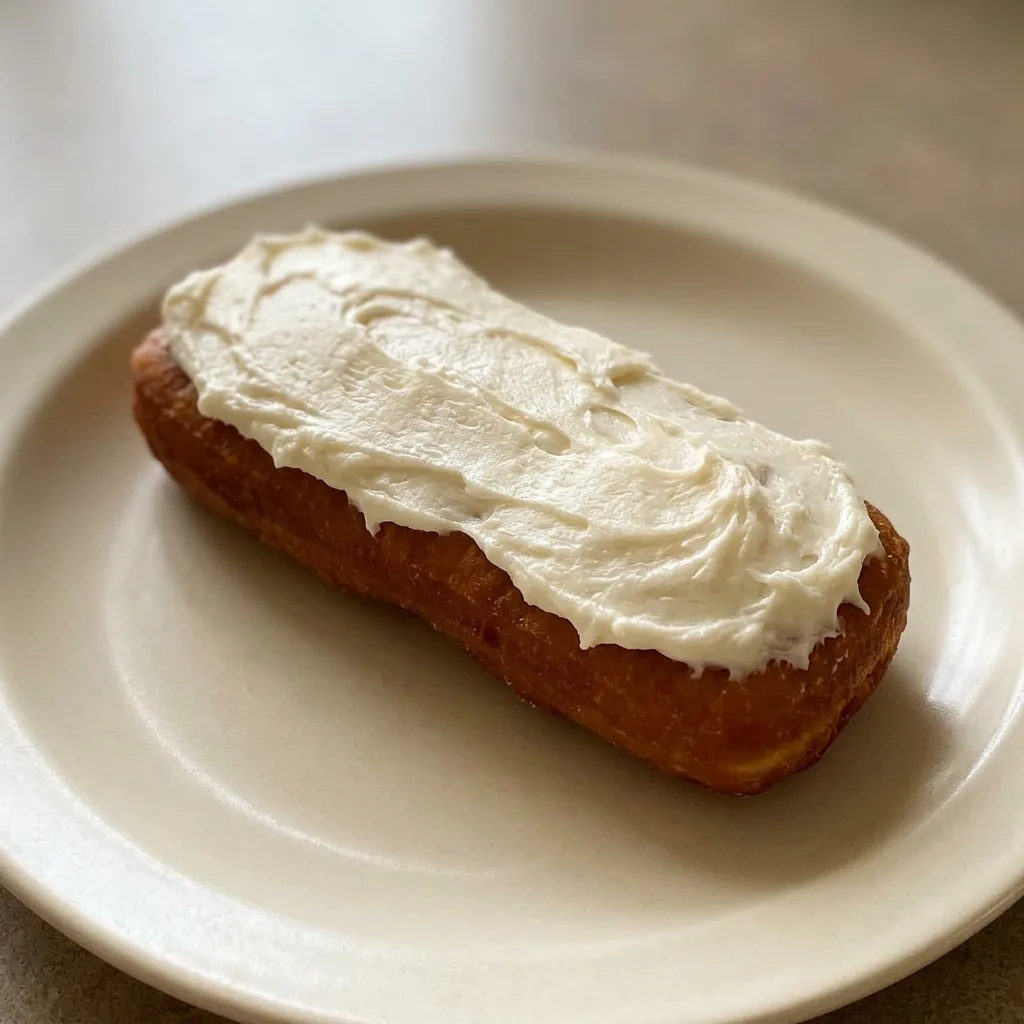
Amish Long John Donuts (Cream-Filled Bakery Favorite)
Ingredients
Method
Dissolve yeast in water:
In a small bowl, combine the lukewarm water and yeast, stirring until fully dissolved. Set aside.Add scalded milk:
Heat the milk until scalded, then allow it to cool to lukewarm. Add the lukewarm milk to the yeast mixture.Mix eggs and margarine:
In a separate bowl, mix the eggs, margarine, sugar, salt, and nutmeg until thoroughly combined. Add this blend to the milk-yeast mixture.Knead bread dough:
Incorporate the bread flour gradually, mixing until the dough becomes elastic and manageable.First rise until doubled:
Put the dough in a warm spot, cover with waxed paper, and allow to rise until it doubles in volume, roughly 2 hours.Shape into oblong pieces:
Deflate the dough and split it into two equal portions. Roll each portion to a thickness of 3/4-inch (2 cm) and cut into oblong pieces 7 inches (18 cm) long.Second rise until puffy:
Allow the cut pieces to rise again until they become puffy.Fry rolls until golden:
In a deep pan, heat vegetable shortening to a depth of 2 to 3 inches (5-7.5 cm) until very hot (around 350°F (175°C)/177°C). Fry the rolls in batches until golden brown, roughly 2 minutes per side.
Make butter frosting:
For the frosting: In a medium bowl, cream the softened butter with the vanilla and 1 cup (120 g) of powdered sugar. Slowly add the milk and the remaining powdered sugar, stirring until the mixture is smooth.Frost cooled rolls:
Once the rolls have cooled, frost them if desired.
What to swap in long john donuts, and what to leave alone
margarine: Unsalted butter, same amount. Butter has less water and more fat than stick margarine. The dough will be slightly less tender but richer in flavor.
If you use salted butter, skip the added salt in the recipe.
milk: Buttermilk, same amount. Buttermilk adds tanginess and reacts with baking soda (if any) to lighten the crumb.
Since this recipe uses yeast only, the main effect is flavor. The dough may feel a bit stiffer; add a tablespoon of water if it seems dry.
bread flour: All-purpose flour, same amount. Donuts will be less chewy and more cake-like. The lower protein in all-purpose creates a softer gluten network, so the donuts may not hold their shape as well during frying and could absorb more oil.
Stick with bread flour for the signature texture.
active dry yeast: Instant yeast, same amount. Instant yeast doesn’t need proofing in water first. You can add it directly to the dry flour.
Reduce the rise time slightly, instant works faster, and watch the dough, not the clock, to determine when it doubles.
Storing Long John Donuts
For the best texture, eat frosted long johns within 4 hours of glazing. The butter glaze stays soft and matte, but after a day it can turn tacky or weep. Unfrosted donuts keep better: store them in a paper bag at room temperature for up to 2 days.
A sealed container traps moisture and makes the crust soggy. If you need to keep them longer, freeze unfrosted donuts in a single layer on a sheet pan, then transfer to a zip-top bag.
They hold for up to a month. Thaw at room temperature, then glaze just before serving. Frosted donuts don’t freeze well: the glaze becomes sticky or cracks when thawed.
To refresh day-old unfrosted donuts, warm them in a 300°F oven for 5 minutes. That brings back some of the initial crispness.
Never microwave them, the texture turns rubbery. Serve glazed donuts the same day you make them for the best contrast between soft dough and firm, matte glaze.
Tips
- Use a deep-fry or candy thermometer clipped to the pot and adjust the burner to maintain 350°F throughout frying. If the oil drops below 325°F, the dough absorbs fat and turns greasy; if it climbs above 375°F, the outside burns before the center cooks through.
- Fry in small batches (2-3 long johns at a time) and let the oil return to 350°F between batches. Crowding the pot drops the oil temperature rapidly, leading to uneven cooking and oil-soaked donuts.
Frequently Asked Questions
Can I make the dough the night before and let it rise in the fridge?
Yes, you can do the first rise in the fridge overnight. The cold slows down yeast activity, so the dough develops flavor slowly without overproofing. Next day, let it sit at room temperature until it warms up and doubles, then proceed with shaping and the second rise.
Unfrosted donuts keep better anyway; glaze just before serving.
Why did my donuts turn out greasy instead of light?
Most likely the oil wasn’t hot enough when you dropped in the dough. At 350°F, the crust sets quickly, sealing out oil.
If the oil is cooler, the donuts soak up fat before they cook through. Also, overcrowding the pot drops the temperature; fry just 2-3 pieces at a time. A properly fried donut should feel light and not leave a greasy residue on your fingers.
How is this Amish long john different from a classic yeast donut?
The dough uses bread flour for extra chew, and the double rise gives an open, airy crumb. Classic yeast donuts often use all-purpose flour and a shorter rise, resulting in a softer, more cake-like texture. The long john shape, an oblong piece, fries with a higher crust-to-crumb ratio, so you get more crispness per bite.
Plus, the butter-based glaze stays soft and matte, not hard and shiny.
