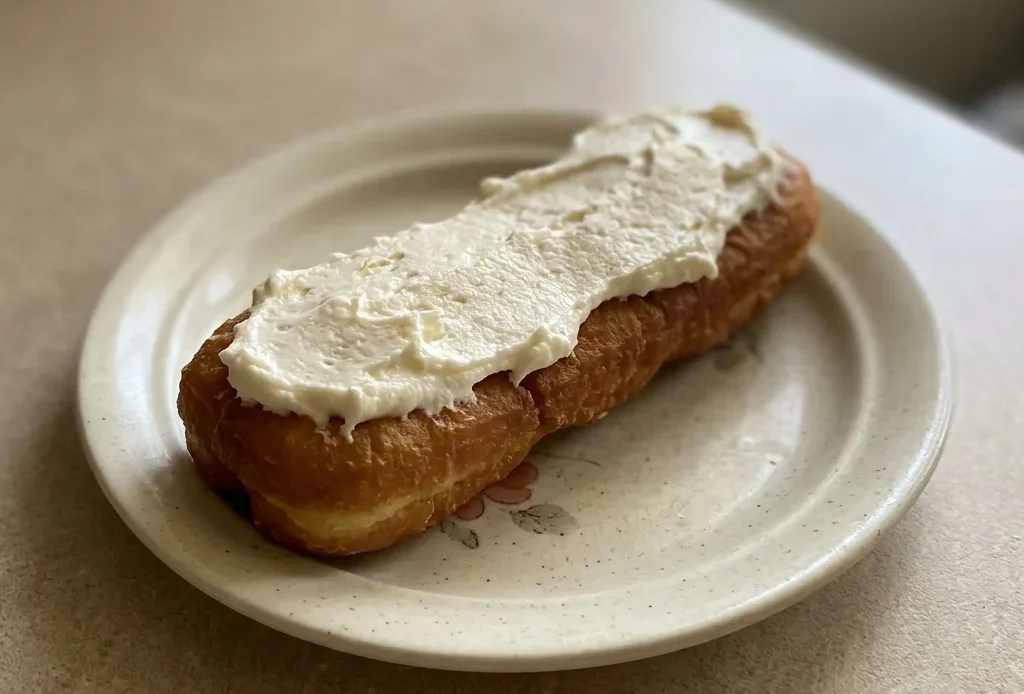
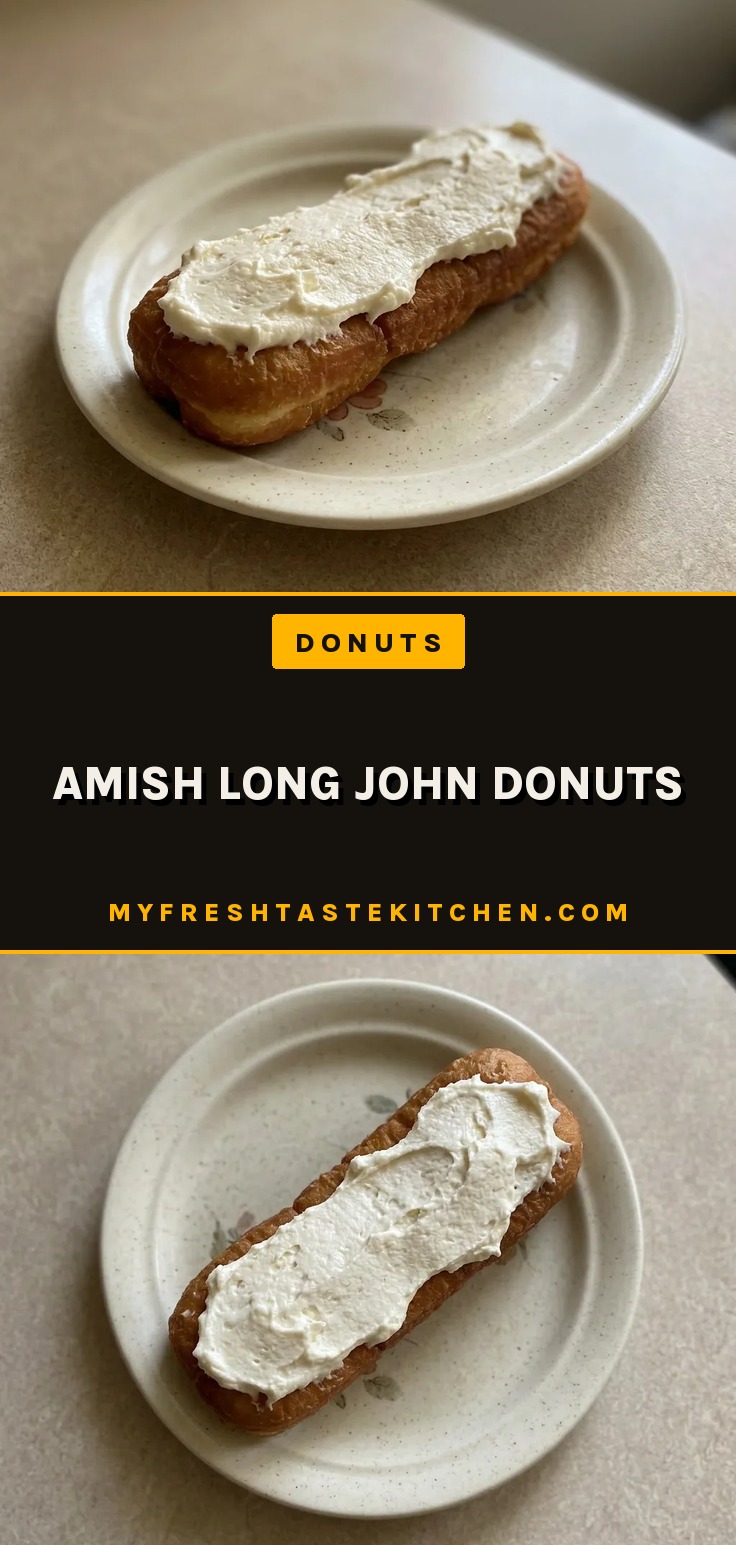
Warm, spiced air fills the kitchen as these golden ovals fry up with a soft, marshmallow-like crumb under a creamy vanilla frosting. That gentle nutmeg aroma is the first clue these aren’t ordinary donuts, the dough itself tells a story of patient proofing and a fat choice that keeps the texture impossibly light. Making amish long john donuts at home means managing two slow rises and a steady oil temperature, but the reward is a tender, airy pastry that tastes like a bakery case from a simpler time.
Why scald the milk for donut dough?
Scalding changes milk proteins in a way that strengthens the dough. You’ll notice the dough feels more elastic and holds its shape better during proofing and frying.
That structure translates to a lighter, airier crumb. But you must cool the milk back to lukewarm before adding yeast. Too hot and the yeast dies on contact, leaving you with dense, flat donuts.
A quick finger test, it should feel warm, not hot, keeps the yeast happy and the rise vigorous.
Margarine in donuts? Yes, and here’s why
Margarine isn’t a compromise here; it’s a choice. With more water and a lower melting point than butter, it creates a noticeably softer, more tender crumb. The flavor is milder too, which lets the yeast and a hint of nutmeg come through clearly.
That subtle aroma is what makes these donuts taste distinctly Amish, not like a standard yeast dough. The texture stays light and fluffy, even after frying and frosting.
Why proof twice for light donuts?
The first long rise builds gluten and develops flavor through fermentation. After shaping, the second proof is what actually puffs the donuts up so they float in hot oil and fry up airy.
Skip it and you get dense, bready ovals. Let it go too long and the dough overproofs, those bubbles collapse the moment they hit the oil, leaving you with wrinkled, greasy donuts. The trick is to watch the shaped pieces: they should look puffy and feel soft, almost marshmallowy, before they go in.
What does nutmeg do in Amish Long Johns?
A single pinch of nutmeg is the quiet anchor of these donuts. It adds a warm, earthy note that you can’t quite name but would miss if it were gone. That gentle spice lifts the dough beyond plain yeast bread and ties it to the vanilla frosting.
It’s tradition in Amish baking, and it works because it doesn’t compete, it just makes the whole thing taste more like itself. Without it, the donut leans plain; with it, you get that classic glazed donut shop flavor.
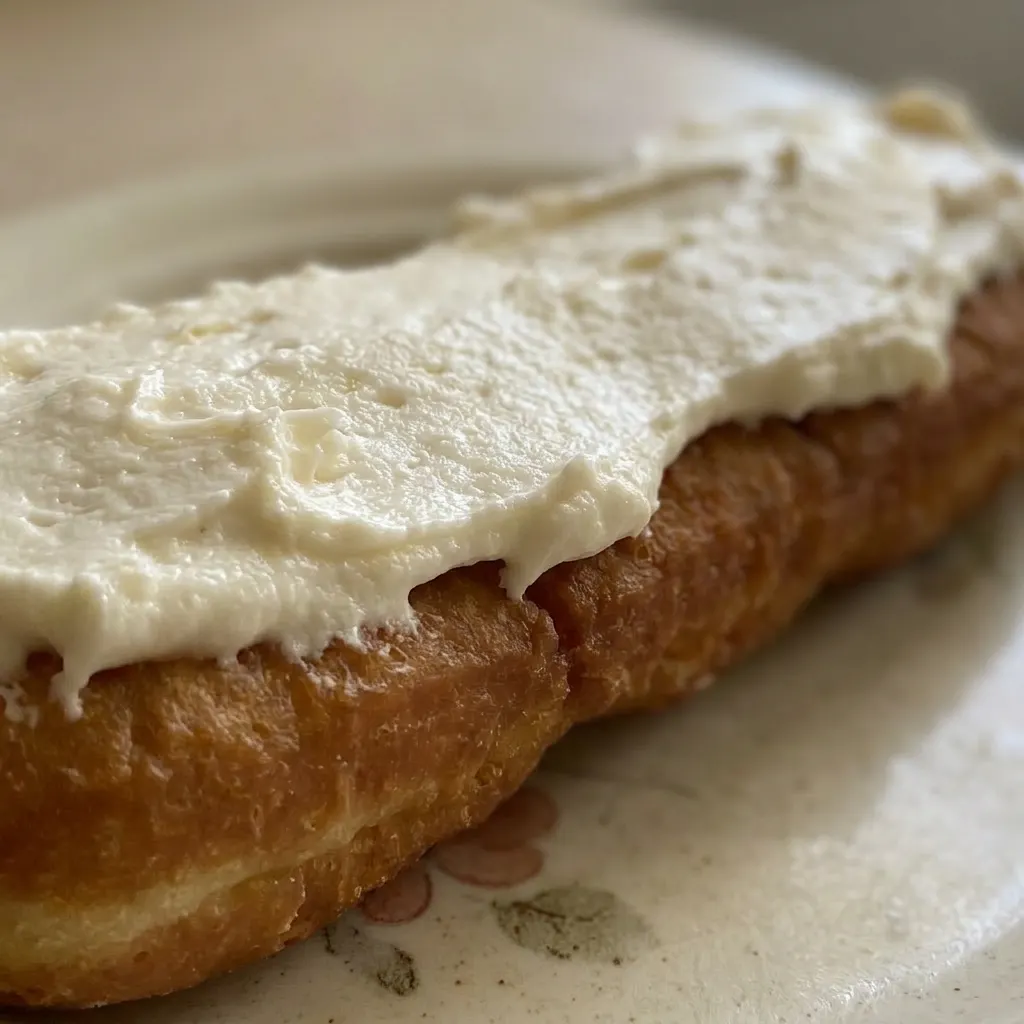
Prep: 30 min · Cook: 20 min · Total: 2 hr 50 min · Servings: 24
Ingredient Notes for Amish Long John Donuts
Bread flour: Use bread flour for its higher protein content; it gives the donuts a chewy, sturdy crumb that holds up to frying.
Active dry yeast: Two packets or 4.5 teaspoons; check the expiration date. Dead yeast won’t foam and your dough won’t rise.
Margarine: Use stick margarine, not tub spread. The lower fat content in tubs ruins the dough’s texture.
Nutmeg: A pinch of freshly grated nutmeg is best. Pre-ground works, but the flavor will be less pronounced.
Make the dough right, fry it light
Bloom the yeast
Sprinkle yeast over 1 cup lukewarm water. Whisk until fully dissolved. It should look creamy and smell yeasty after a few minutes.
If it stays grainy or doesn’t foam, your yeast is dead, start over.
Mix the wet ingredients
Beat eggs, margarine, sugar, salt, and nutmeg until smooth. The margarine should be well incorporated, no streaks.
Stir in the cooled milk and yeast mixture. The batter will look thin and slightly foamy.
Knead the dough
Add flour gradually, mixing until a shaggy dough forms. Turn out and knead 8 to 10 minutes until smooth and elastic. It should spring back when poked.
If it feels sticky, add flour a tablespoon at a time.
First proof
Place dough in a greased bowl, cover with waxed paper, and set in a warm spot. Let rise until doubled, about 2 hours. The dough should look puffy and feel airy when pressed.
Shape the donuts
Divide dough in half. Roll each to 3/4-inch thick on a floured surface.
Cut into 7-inch ovals. Don’t twist the cutter; press straight down and pull up cleanly. Reshape scraps gently.
Second proof
Place shaped pieces on floured parchment, cover loosely, and let rise until puffy and marshmallow-soft. This takes 30 to 45 minutes. They should look swollen but not fragile.
Overproofed dough deflates when touched.
Fry the donuts
Heat shortening to 350°F. Fry in batches, turning once, about 2 minutes per side until deep golden.
The donuts should bubble steadily. If they brown too fast, lower the heat. Drain on paper towels.
Make the frosting
Beat softened butter with vanilla and 1 cup powdered sugar until creamy. Slowly add milk and remaining sugar, beating until smooth.
It should be thick but spreadable. Add more milk a teaspoon at a time if needed.
Frost the donuts
Once donuts are completely cool, spread frosting over tops. Let set a few minutes before serving. The frosting will firm up slightly but stay creamy.
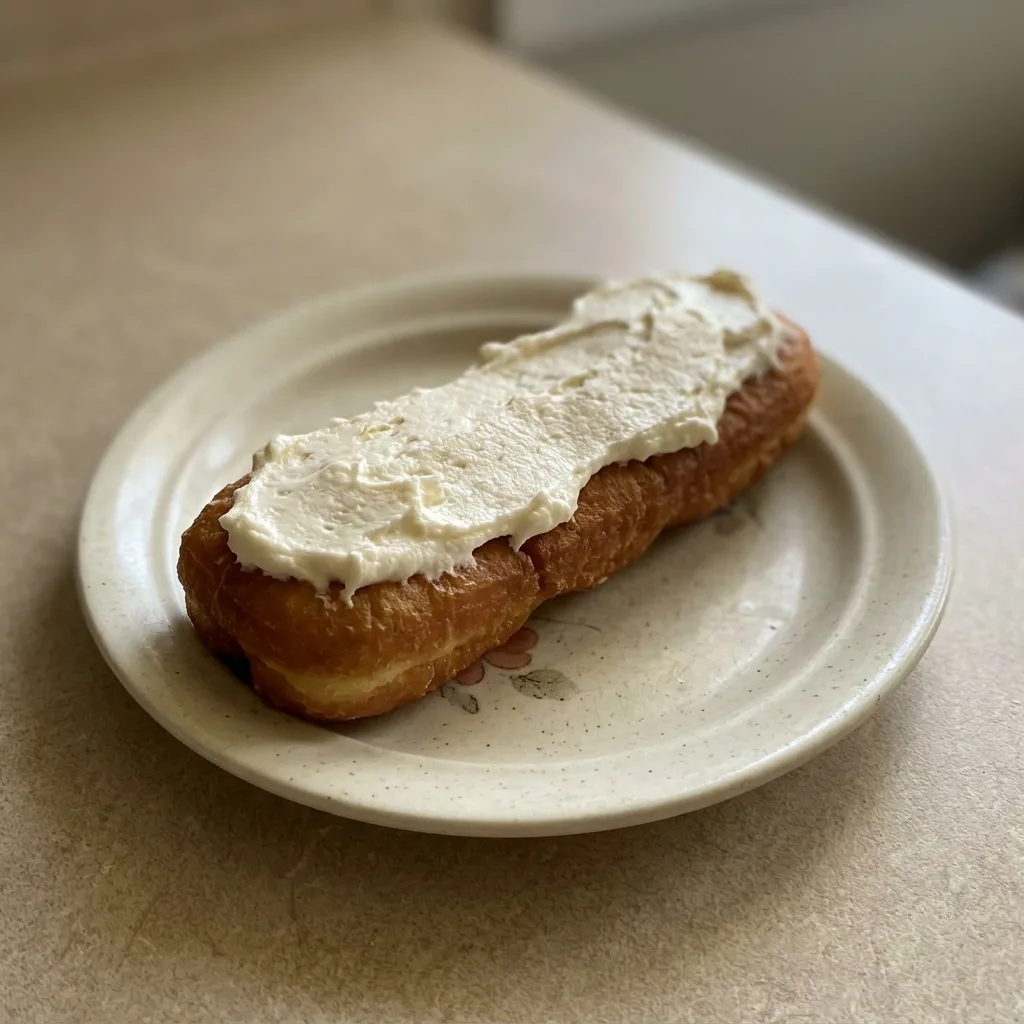
Amish Long John Donuts
Ingredients
Method
Dissolve yeast in water:
Place the lukewarm water in a small bowl, sprinkle the yeast over it, and whisk until fully dissolved. Reserve.Combine milk with yeast:
Heat the milk until scalded, then allow it to return to lukewarm. Combine the lukewarm milk with the yeast mixture.Mix egg mixture:
In another bowl, mix the eggs, margarine, sugar, salt, and nutmeg until uniform. Incorporate this into the milk-yeast blend.Knead dough:
Slowly incorporate the bread flour, kneading until the dough becomes smooth and pliable.Proof dough until doubled:
Set the dough in a warm area, cover with waxed paper, and allow to proof until doubled, roughly 2 hours.Shape into ovals:
Deflate the dough, split into two equal portions. Roll each to a 3/4-inch (2 cm) thickness, then slice into 7-inch-long (18 cm) ovals.Proof again:
Let the cut pieces proof once more until they become light and airy.Fry until golden:
In a deep pan, heat vegetable shortening to a depth of 2 to 3 inches (5-7.5 cm) until very hot (approximately 350°F (175°C)/177°C). Fry the pieces in batches till golden, roughly 2 minutes per side. Transfer to paper towels to drain and cool.
Make vanilla frosting:
For the frosting: In a medium bowl, beat the butter with the vanilla and 1 cup (120 g) of the powdered sugar until creamy. Slowly add the milk and remaining powdered sugar, stirring until the mixture is smooth.Frost cooled rolls:
Once the rolls have cooled completely, apply the frosting if desired.
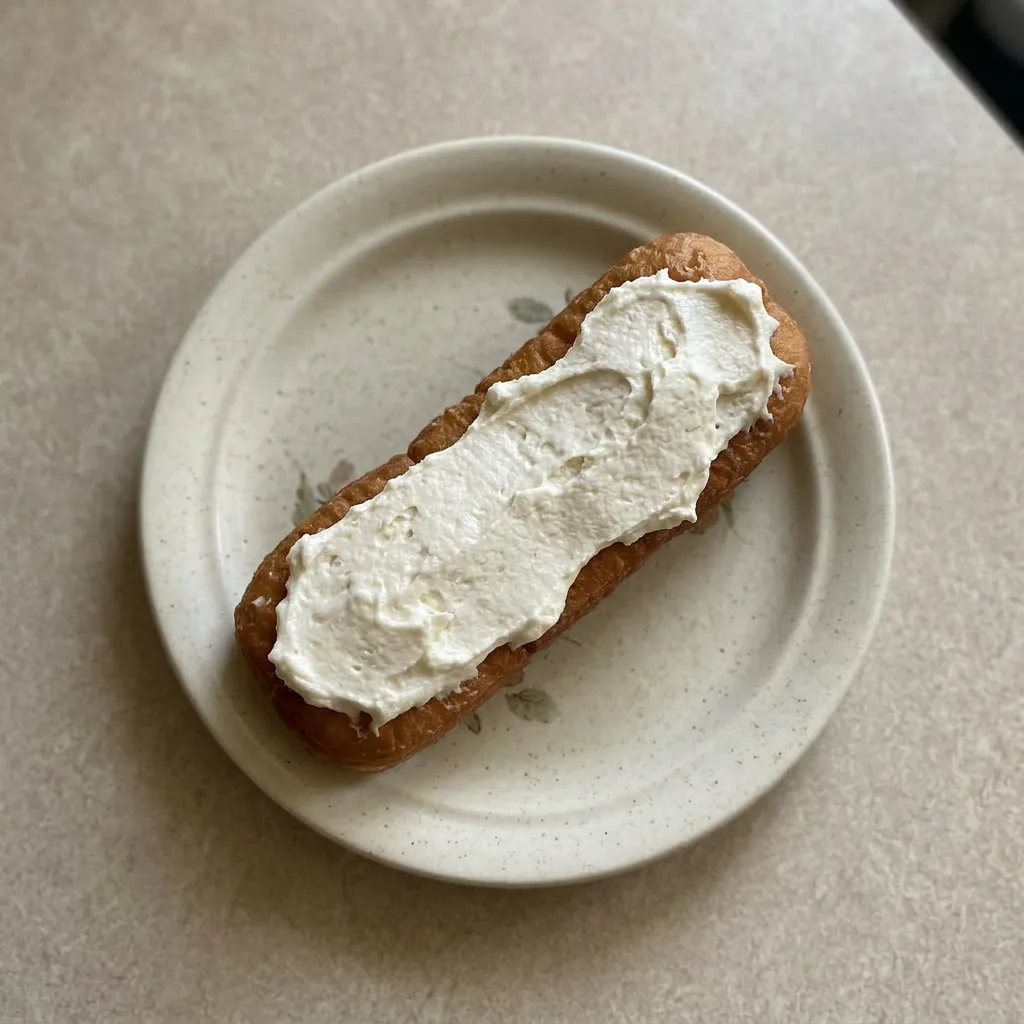
Storage and Serving
For the best texture, serve these donuts within a few hours of frying and frosting. The frosting stays soft and creamy, and the crumb is lightest at this point. Leftovers can be stored in an airtight container at room temperature for up to 2 days.
After that, the donuts start to dry out and the frosting may get sticky. To refresh, warm a single donut in a 300°F oven for 3 to 5 minutes. Do not refrigerate; the fridge accelerates staling.
Freezing is not recommended. The dough itself can be frozen after the first proof, but once fried and frosted, the texture degrades significantly upon thawing. If you must freeze, skip the frosting, freeze the unfrosted donuts in a single layer on a sheet pan, then transfer to a zip-top bag for up to 1 month.
Thaw at room temperature and frost just before serving.
When you swap margarine for butter, treat it as a different fat
Margarine: Butter, unsalted, softened (same amount by weight, 113 g). Butter has less water and more fat, so the dough will be slightly less tender and a touch firmer.
The flavor shifts from neutral to buttery, which overpowers the nutmeg and yeast notes. If you use butter, expect a richer, more pastry-like donut, still good, but not the classic Amish profile.
Milk (for dough and frosting): Unsweetened almond milk or oat milk, used 1:1 by volume. Lower protein and fat in non-dairy milks make the dough less elastic and the crumb slightly denser.
The frosting will be thinner; you may need to add an extra tablespoon of powdered sugar to reach spreading consistency. Flavorwise, almond milk adds a faint nuttiness; oat milk is more neutral. Both work, but the donut won’t puff as high.
Bread flour: All-purpose flour, same volume (7 cups, but weigh 980 g if possible). Less protein means less gluten development.
The dough will feel softer and may spread more during frying, yielding flatter, less chewy donuts. They’ll still taste fine, but the signature light-but-sturdy crumb turns a bit cakey. If you swap, reduce the second proof by about 10 minutes to prevent over-spreading.
Active dry yeast: Instant yeast, same amount (14 g). Instant yeast doesn’t need blooming, skip step 1 and mix it directly with the flour. The rise may happen slightly faster, so watch the dough, not the clock.
No change in final texture or flavor.
Tips
- Use a deep-fry or instant-read thermometer to keep the oil at a steady 350°F. If the temperature drops below 325°F, the donuts absorb excess oil and turn greasy. If it climbs above 375°F, the outside burns before the inside cooks through. Adjust the burner between batches to maintain the target.
Frequently Asked Questions
Can I make the dough the night before and fry them in the morning?
You can, but the texture suffers. After the first proof, punch the dough down, wrap it tightly, and refrigerate overnight.
Next morning, let it come to room temperature before shaping, about an hour. The second proof after shaping will be slower; give it time until the pieces feel marshmallow-soft. The crumb won’t be as airy as same-day dough, but it’s still good.
Don’t refrigerate after frying or frosting; that’s where the trouble starts.
Why did my donuts turn out greasy instead of light and fluffy?
Most likely the oil wasn’t hot enough. At 350°F, the donuts should sizzle immediately when they hit the fat, if not, they soak up oil. Check with a thermometer; if you don’t have one, drop a scrap of dough in: it should bubble vigorously and brown in about 60 seconds.
Overcrowding the pan also drops the temperature, so fry in small batches. Second possibility: the second proof went too far.
Overproofed dough collapses in the oil, creating a dense, greasy interior.
What’s the difference between Amish Long Johns and regular long john donuts?
The main difference is the dough itself. Amish Long Johns use nutmeg and margarine, which give a softer, more tender crumb with a warm, subtle spice, not the butter-forward flavor of a standard long john. The shaping is also thicker (3/4 inch) and the proofing is longer, so the finished donut is lighter and airier.
Regular long johns often use a leaner dough with butter, yielding a denser, more cake-like texture.
