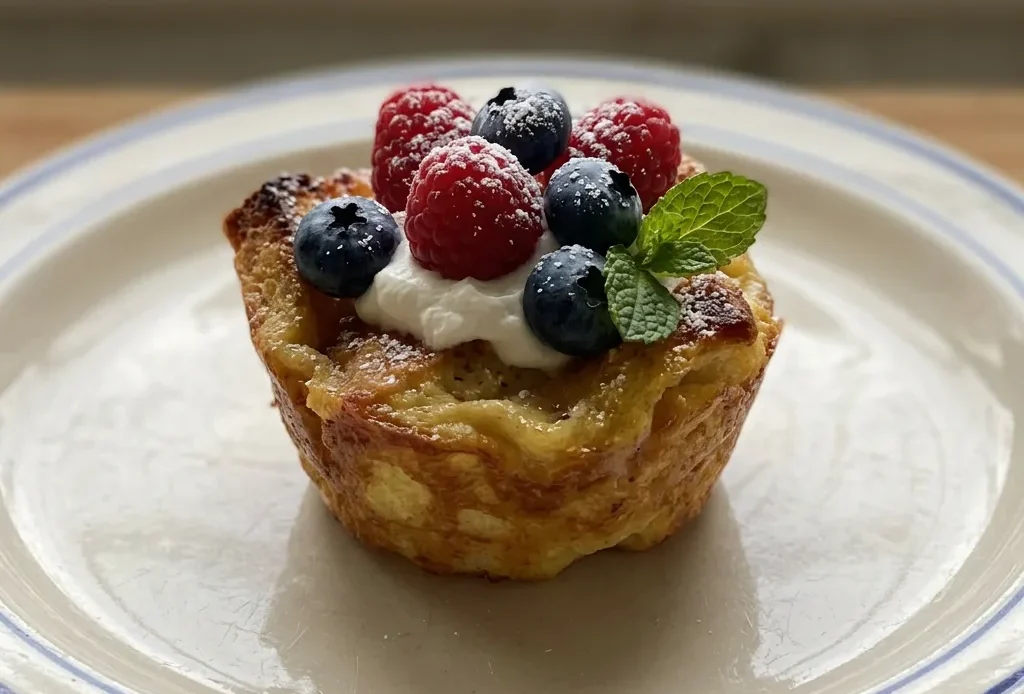
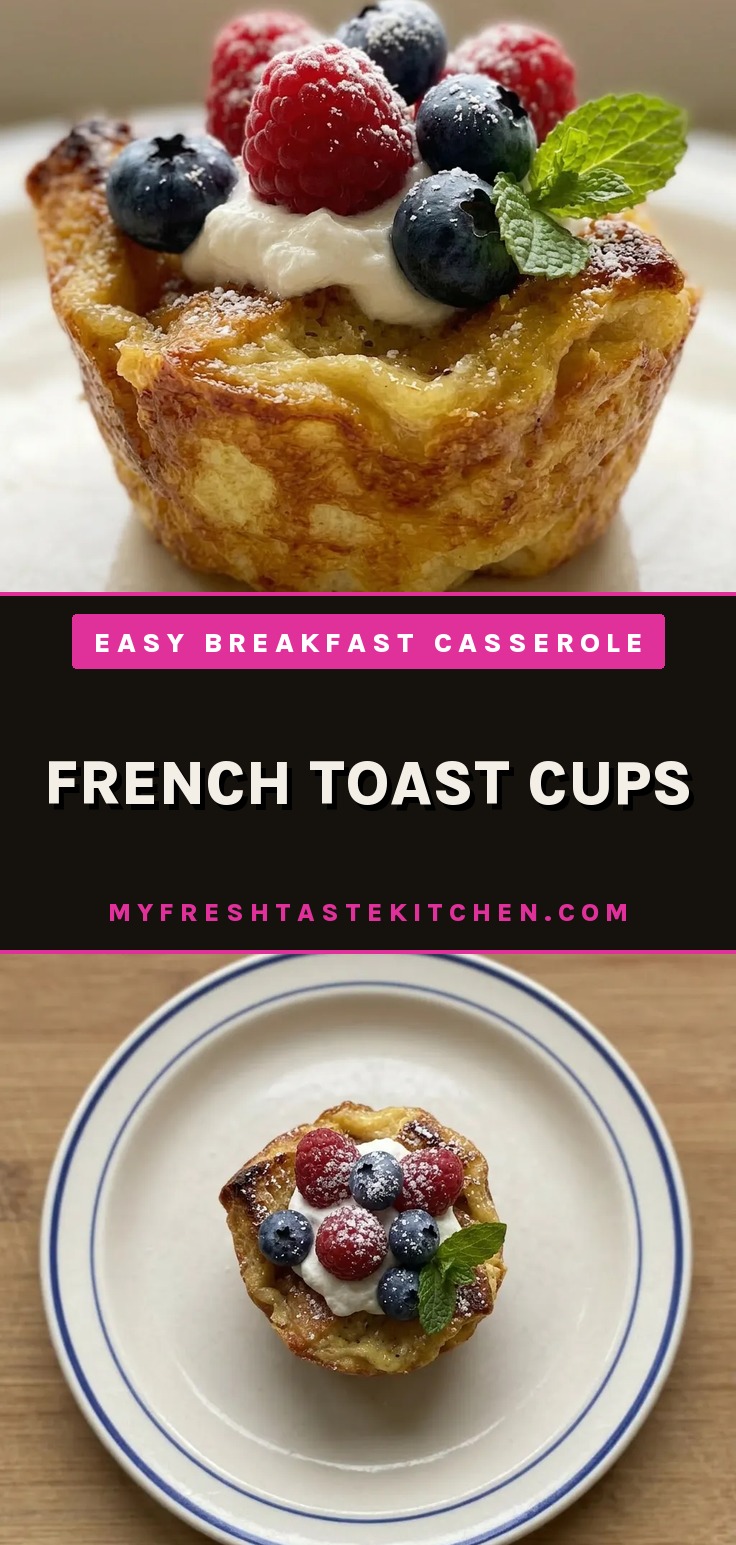
The edges get deeply caramelized, almost crunchy, while the center stays soft and custardy, each cup is its own little package of contrast. That’s the draw of french toast cups: you get the crisp-to-tender texture without standing at a skillet flipping individual slices. They’re forgiving, too; the bake time has a window, not a cliff, so you can pull them when the corners look right without worrying about a rubbery interior.
The Bread’s Role
Brioche or challah isn’t just a suggestion, it’s the key to the texture. Their soft, rich crumb soaks up the custard without turning soggy, staying tender and creamy inside. That slight sweetness means you need less sugar in the mixture.
A sturdier bread like sourdough would leave you with chewy, uneven pockets. You want a loaf that yields to the custard, not fights it.
Soaking, Not Drowning
Getting the custard into every crevice is the whole point. After ladling it over the bread, I gently press each piece down with a fork, which guarantees every crumb is soaked but not waterlogged. The ratio, eggs, milk, sugar, spices, is balanced so the bread drinks it up.
Proper saturation means a creamy interior once baked, with no dry spots lurking inside.
Individual Edges, Tender Centers
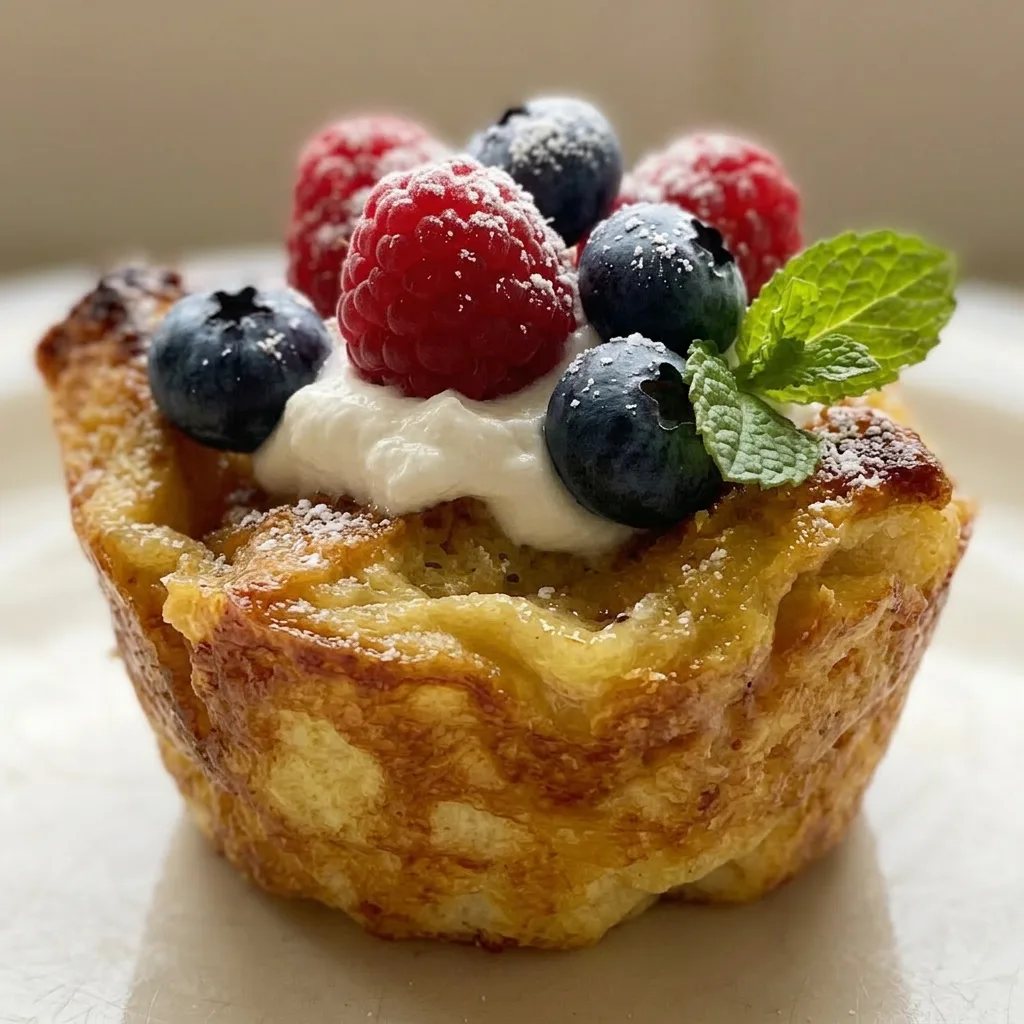
A muffin pan turns this into single servings with a built-in contrast. The heat hits the exposed edges directly, caramelizing them into crispy, browned bits while the center stays custard-soft. Turning the pan halfway through ensures every cup browns evenly.
No need to cut or serve, just lift them out warm, each one its own little package of crisp and cream.
Prep: 15 min · Cook: 25 min · Total: 45 min · Servings: 12 · Calories: 220 kcal
A Few Ingredient Details
Brioche or Challah Bread: Day old is fine. Fresh works too, just dry it in a 300°F oven for 5 minutes.
Eggs: Large eggs only. Size matters for the custard ratio.
Whole Milk: 2% works but whole gives a richer custard that sets up firmer.
Nutmeg: Freshly grate it. Preground is already flat and won’t perfume the custard.
Vanilla Extract: Use real extract, not imitation. It’s the backbone flavor here.
Soaking, Filling, Baking
Prep the pan and bread
Butter a 12-cup muffin pan. Slice the loaf into quarters, each piece should be about 1½ inches thick. Tuck one piece into each cup, pressing gently so it fills the well.
Mix the custard
Whisk eggs, milk, sugar, vanilla, cinnamon, nutmeg, and salt until smooth. The mixture should be uniform with no streaks of egg white. Taste it, it should be sweet and spiced, but not cloying.
Soak the bread
Ladle custard over each bread piece, about 2 tablespoons per cup. Press down with a fork until the bread looks saturated and the custard pools slightly around it. No dry spots should remain.
Bake and rotate
Bake at 350°F for 22 to 25 minutes. Halfway through, rotate the pan front to back. The edges should be deep golden brown and the centers just set, they’ll still jiggle slightly when you shake the pan.
Cool and lift
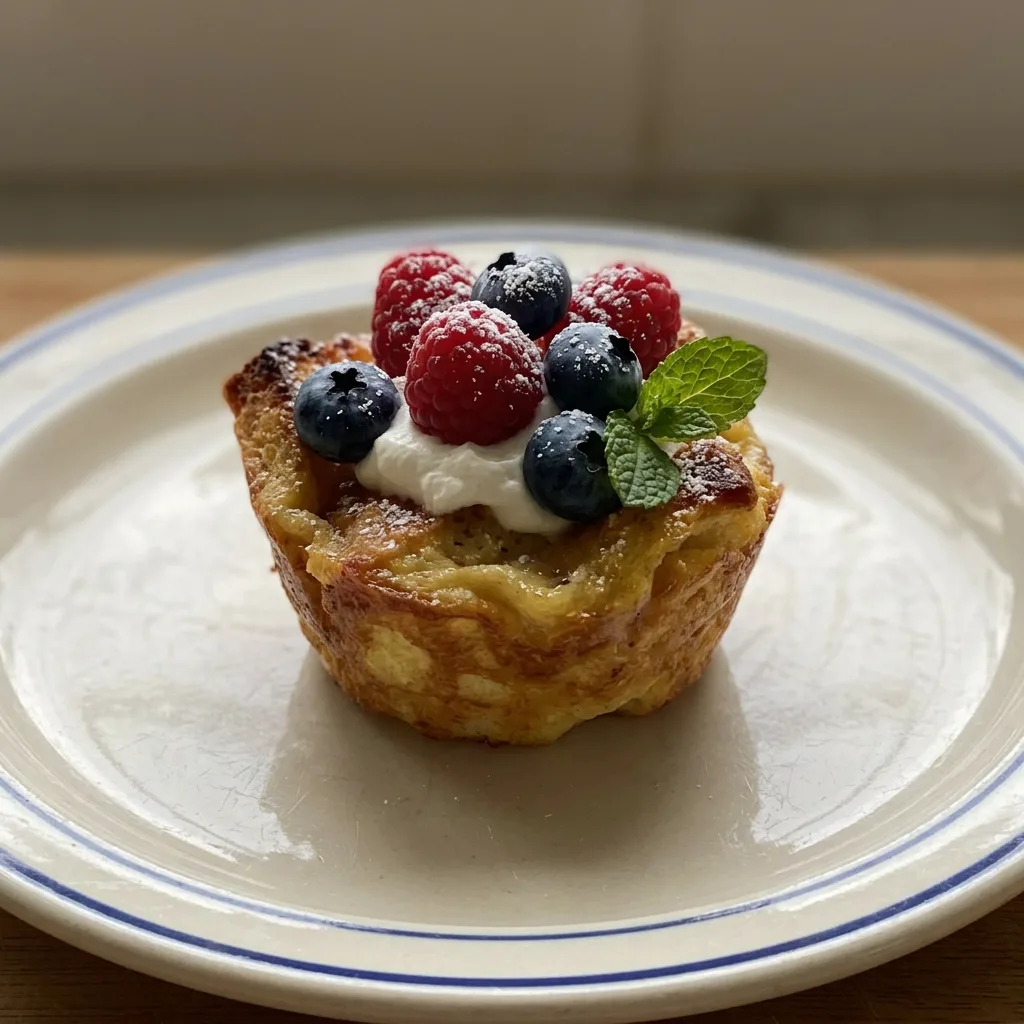
Let the cups cool in the pan for 2 to 3 minutes. Run a thin knife around each cup to loosen, then lift them out with a fork or offset spatula. They should hold their shape, crisp outside, soft inside.
French Toast Cups
Ingredients
Method
Preheat oven and butter pan:
Heat oven to 350°F (175°C) and butter a 12-cup muffin pan.Nestle bread into cups:
Slice bread into quarters and softly nestle each piece into a muffin cup.Whisk custard ingredients:
In a bowl, combine eggs, milk, sugar, vanilla, cinnamon, nutmeg, and salt with a whisk.Ladle custard over bread:
Ladle the custard over the bread pieces and gently push down.Bake and rotate pan:
Bake for 22-25 minutes, turning the pan halfway to ensure uniform browning.Cool and serve warm:
Let cool briefly, then lift from the pan and serve warm.
Storage and Serving
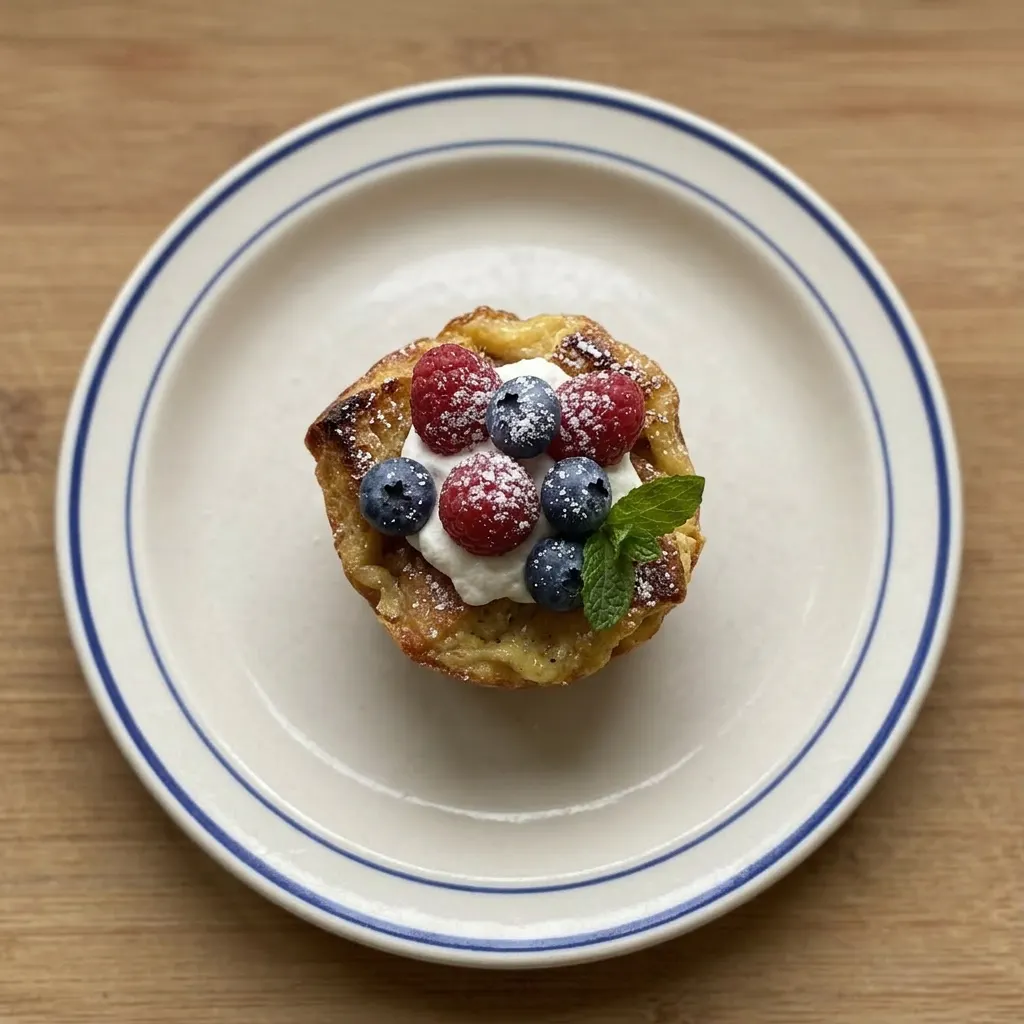
These cups are at their peak right out of the oven, when the edges are crisp and the centers are still soft and custardy. If you’re making them ahead, assemble the cups in the pan, cover tightly with foil, and refrigerate overnight. Bake them straight from the fridge, adding 5 minutes to the cook time.
Leftover cups keep in an airtight container in the fridge for up to 3 days. The texture shifts over time: the edges soften and the interior firms up.
To restore some crispness, reheat them in a 350°F oven for 8 to 10 minutes, directly on the oven rack or a baking sheet. The microwave will turn them rubbery, so avoid it.
Freezing is not recommended; the custard breaks and the bread turns mealy upon thawing. Serve warm, within 30 minutes of baking for the best contrast between crisp and tender.
Tips
- If your bread is fresh, leave the slices out on the counter for an hour before cubing so they dry slightly and absorb custard without getting mushy.
- Use a serrated knife to cut the bread; it crushes the soft crumb less than a straight blade, so the pieces hold their shape during soaking.
What to Swap (and What Not To) in French Toast Cups
Brioche or Challah Bread: Thick-cut white bread or cinnamon raisin bread. Soft white bread works but yields less richness and a slightly flatter custard. Cinnamon raisin adds its own sweetness and spice that can clash with the nutmeg, still tasty, just different.
Avoid anything too sturdy like sourdough; it won’t soften into that creamy interior.
Eggs: Flax or chia seed gel (1 tbsp seeds + 3 tbsp water per egg, use 4 batches). The custard sets softer, more like a bread pudding than a firm custard cup. It won’t hold as tall a shape and may be slightly wetter.
Let the gel sit 10 minutes to thicken before whisking with the milk. Works for vegan but expect a tender, less defined result.
Whole Milk: Almond, oat, or soy milk. Oat milk comes closest to whole milk’s richness; almond milk makes a thinner custard that browns faster, check at 18 minutes. Soy milk holds structure well.
None thicken quite like dairy whole milk, so the cups will be slightly less set in the center.
Sugar: Sugar substitute (stevia, monk fruit, or erythritol blend). Use a 1:1 granulated substitute if you have it.
The custard’s sweetness will be similar but the browning may be paler, substitutes don’t caramelize the same. Splenda granular works fine, but liquid stevia can throw off the liquid ratio; stick to dry alternatives.
Frequently Asked Questions
Can I make French toast cups ahead of time?
You can assemble them in the pan, cover tightly, and refrigerate overnight. Bake straight from the fridge, adding 5 minutes to the 22 to 25 minute bake time. The texture is best within 30 minutes of baking, so plan to finish them close to serving.
How do I prevent the cups from sticking to the pan?
Butter the muffin pan generously before adding the bread. After baking, let them cool 2 to 3 minutes, then run a thin knife around each cup before lifting. The butter creates a release layer; if they still stick, the pan may need more butter next time.
What’s the difference between French toast cups and regular French toast?
The cups are baked in a muffin pan, so the exposed edges caramelize into crispy bits while the center stays custard-soft. Regular French toast is skillet-cooked, giving a more uniform crust. The cups also come in individual portions with no slicing needed.
Why did my French toast cups turn out soggy instead of fluffy?
Most likely the bread wasn’t rich enough or the custard ratio was off. Brioche or challah absorbs custard without turning soggy; sturdier breads won’t soften properly. Also check that you pressed the bread down after soaking, air pockets create dry spots that collapse into sogginess later.
