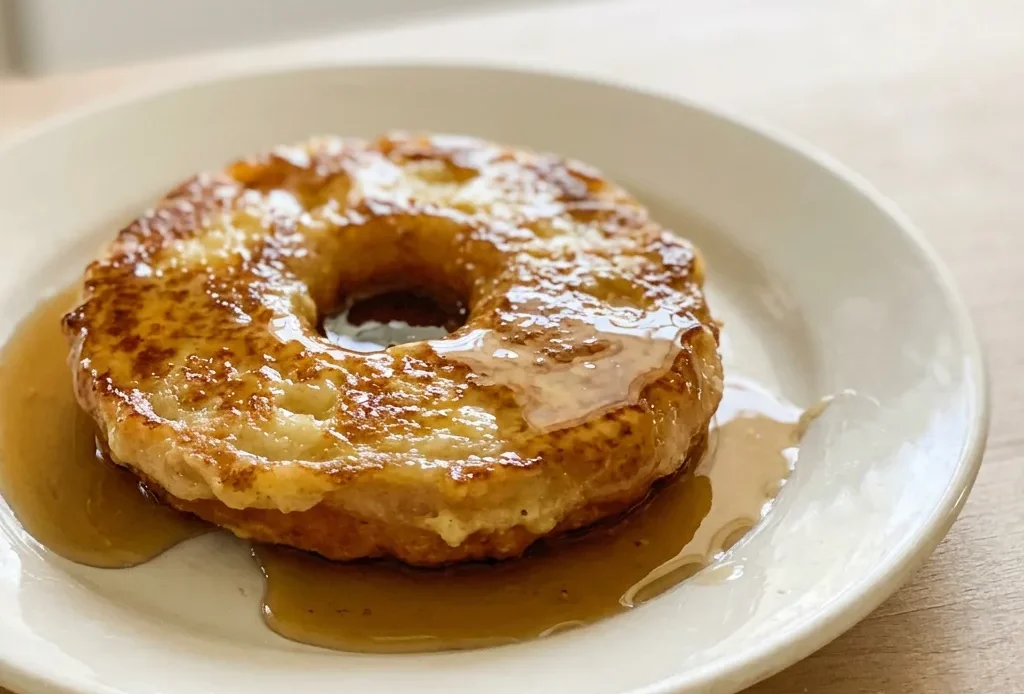
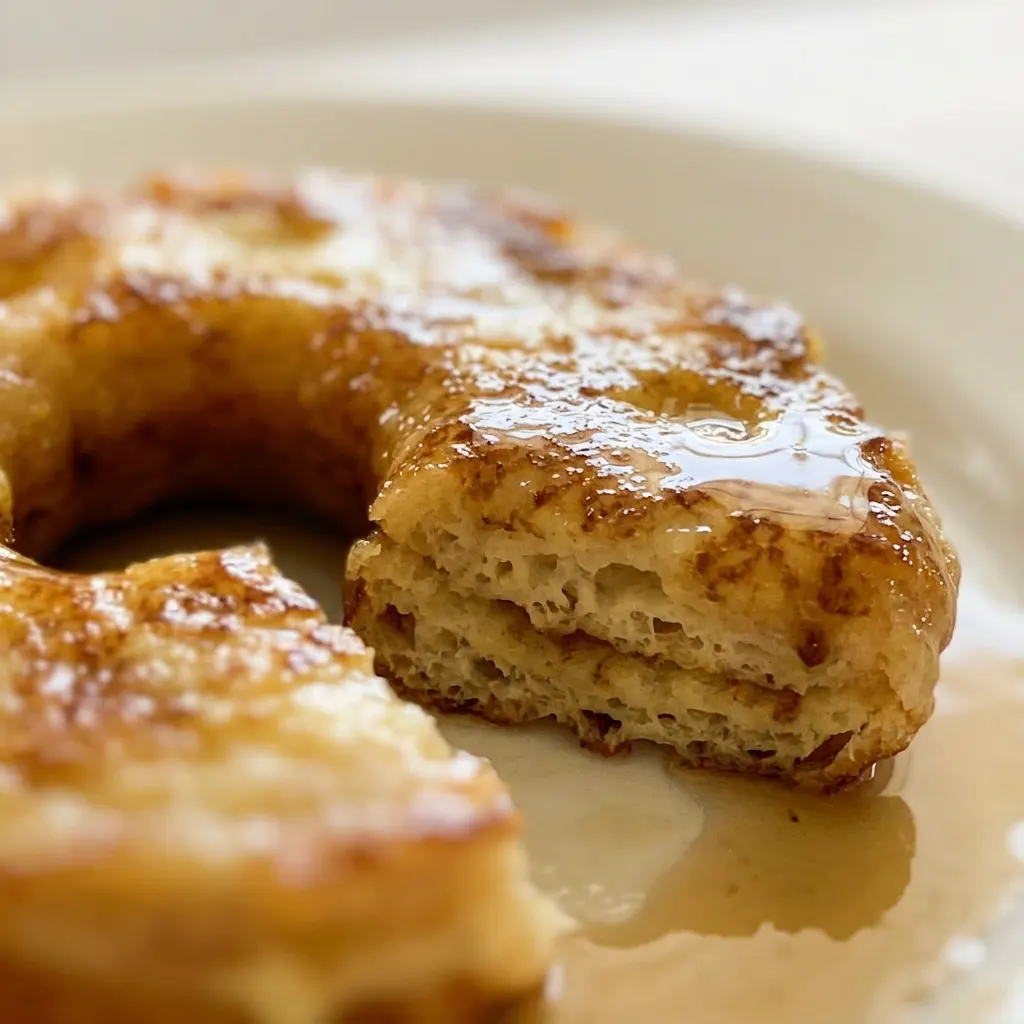
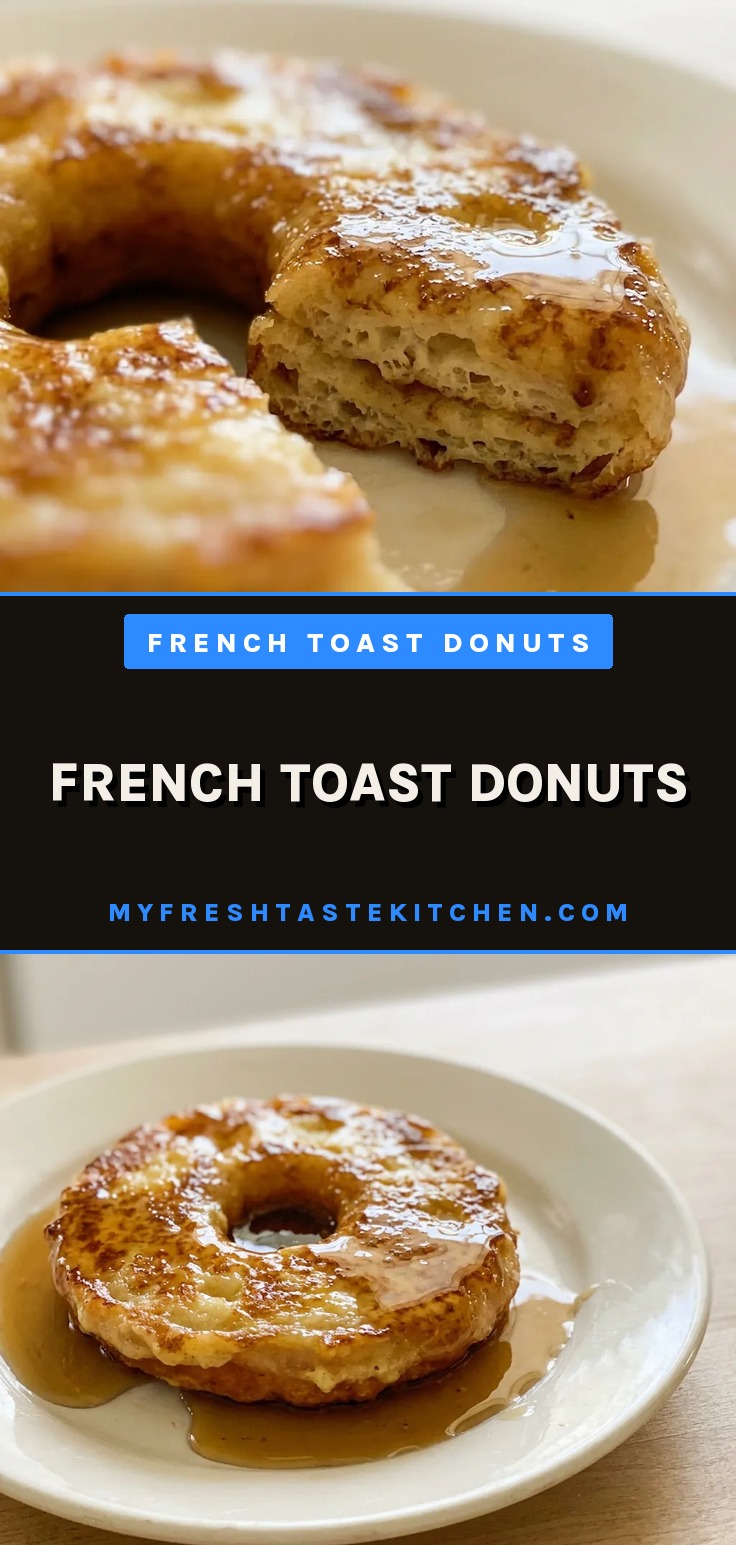
The cut side turns deep golden with darker caramelized spots, the glaze doing what sugar does, browning fast and crisp. Inside stays tender, almost cakey, not gummy. That contrast is why french toast donuts work when regular bread French toast doesn’t, but the margin is tight: a few seconds too long in the custard and you lose the airy crumb entirely.
Speed and fat are the only things separating a creamy, structured donut from a collapsed one.
I still count seconds in my head during the dip, two, three, tops, even though it looks fussy, because one extra second turns into a mushy mess.
Why glazed donuts work best
The glaze on a donut isn’t just a topping, it’s a built-in sweetener that caramelizes in the pan, creating a crisp, golden crust you won’t get from plain bread. That sugary coating browns faster and deeper, adding a layer of flavor that syrup alone can’t match. Meanwhile, the donut’s airy crumb soaks up custard differently than a dense slice of bread.
Instead of turning gummy, it stays tender inside, almost like a soft cake. Day-old donuts are ideal here; their slightly dried surface resists over-saturation, so the texture holds together through the pan.
Fresh donuts work, but they’re more likely to go mushy because the interior is already moist. The glaze also helps seal the surface during the quick cook, trapping the custard inside.
Heavy cream gives structure, not just richness
Heavy cream does more than make the custard taste rich. Its high fat content thickens the mixture so it clings to the donut without soaking straight through.
That fat also helps the custard set firmly as it cooks, creating a creamy interior rather than a wet, eggy one. With cream, you get a custard that firms up enough to hold the donut’s shape, so the halves stay intact when you flip them. The richness balances the sweetness of the glaze and syrup, preventing the dish from being cloying.
Without enough fat, the custard would be thinner and more likely to make the donuts soggy. You can taste the difference: a cream-based custard yields a smoother, more rich bite.
A quick dip prevents sogginess
Donuts are spongier than bread. Their porous structure pulls in liquid fast, so even a few extra seconds in the custard can ruin the texture.
A swift dip, just long enough to coat both cut sides, gives you an even layer of custard without flooding the interior. That keeps the donut’s crumb intact and airy, while the outside browns nicely. If you soak them, the custard seeps all the way through, and the donut turns heavy and falls apart in the pan.
You want the inside to stay tender, not waterlogged. The same logic applies to all porous pastries: a quick bath preserves what makes them special.
This is a case where speed matters more than thorough coverage.
Prep: 5 min · Cook: 5 min · Total: 10 min · Servings: 3 · Calories: 410 kcal
What to know about the ingredients
Glazed donuts: Day-old ones resist sogginess best; fresh work but risk turning mushy because the crumb is already moist.
Heavy cream: Needs at least 36% milk fat to thicken the custard properly and keep donuts from getting waterlogged.
Extra-large egg: One extra-large egg gives the right custard structure without thinning the cream too much.
Honey: Use a runny honey that blends easily; thick or crystallized honey won’t whisk into the cream smoothly.
A quick dip is the key to tender donuts
Whisk the custard
Whisk cream, egg, and honey until smooth, no streaks. The mixture should coat the back of a spoon evenly, if it’s thin, the fat content is low, and the donuts will soak up too much liquid.
Heat the pan
Set a lightly oiled pan over medium heat. When a drop of water sizzles and skitters, it’s ready. Too hot and the sugar burns; too cool and the donuts absorb oil before the custard sets.
Dip and cook
Working one at a time, dip a donut half quickly, both cut sides, in and out, about 2 seconds total. Place it cut-side down in the pan. You want a thin, even coating, not a saturated sponge.
Flip when golden
Cook 2 to 3 minutes until the cut side is deep golden brown with darker caramelized spots from the glaze. Flip and cook the domed side another 1 to 2 minutes until it’s warm and lightly toasted.
Check the interior
Press the donut gently with a spatula, it should feel firm but springy. If it squishes or leaks custard, the dip was too long. A properly cooked donut holds its shape and stays tender inside.
French Toast Donuts
Ingredients
- 3 glazed donuts (fresh or day-old, cut in half lengthwise)
- 1 extra-large egg
- 1/2 tbsp honey
- 1/2 cup heavy cream
- syrup for topping
Instructions
Whisk custard mixture:
In a medium bowl large enough to accommodate donuts, combine heavy cream, egg, and honey. Whisk until uniform.Dip and cook donuts:
Lightly oil your pan or griddle and set heat to medium. When hot, working in batches, swiftly dip donut halves into the egg mixture until fully coated, then transfer to the pan (avoid prolonged soaking to prevent sogginess). Cook several minutes per side until the custard sets and both sides are golden brown. Repeat with remaining pieces.Serve with syrup:
Serve hot with syrup.
Storage and Serving
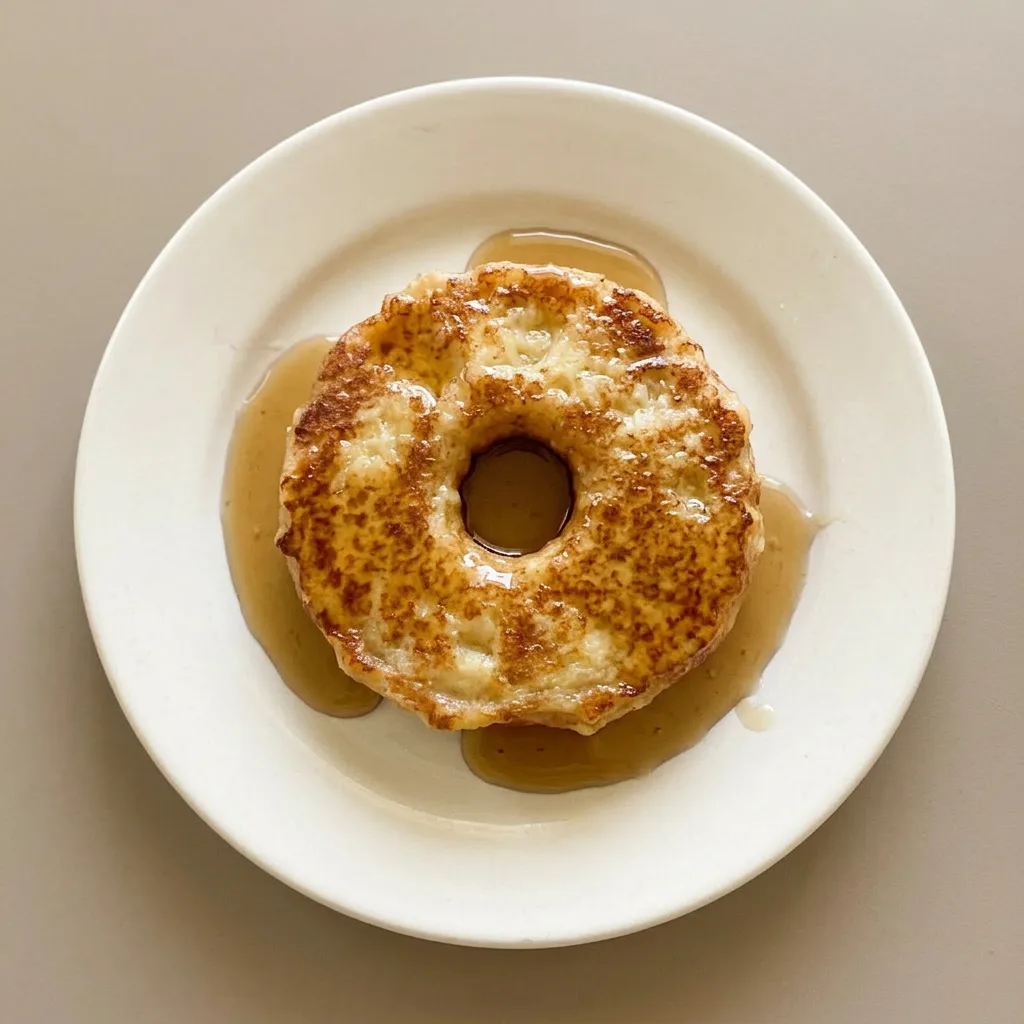
French toast donuts are best served immediately after cooking. The contrast between the crisp, caramelized exterior and the tender, custard-soaked interior is fleeting.
As they sit, the steam trapped inside softens the crust. If you have leftovers, refrigerate them in an airtight container for up to one day.
The donuts will soften further in the fridge, but you can restore some crispness by reheating in a toaster or a 350°F oven for 3 to 5 minutes. Reheating in the microwave will make them soggy.
Do not freeze assembled donuts; the custard will turn watery upon thawing. If you want to prep ahead, whisk the custard mixture and store it covered in the fridge for up to one day. Dip and cook fresh when ready.
Syrup should always be added just before serving, whether fresh or reheated, to keep the donuts from getting wet.
Tips
- Slice donuts horizontally through the middle, not vertically, to maximize the custard-absorbing cut surface and create two even halves that cook uniformly.
- Use a thin spatula to flip the donuts; a thick one can tear the delicate custard crust that forms on the cut side.
Heavy cream is the important custard base
Heavy cream: Half-and-half or whole milk. The custard will be thinner and cling less, making the donuts soggier.
You’ll lose the creamy interior that holds shape when flipped. Start with the same amount as heavy cream, then expect a wetter, less stable result.
Honey: Maple syrup or agave. Maple syrup adds its own flavor and browns similarly.
Agave is neutral and slightly thinner, use the same amount. The custard sets the same way, just with a different sweetener note.
Glazed donuts: Homemade donuts (un-glazed). Without the glaze, you lose the built-in caramelized crust that keeps the donut crisp. The custard will soak in faster and the surface won’t brown as deeply.
Brush the cut sides with a thin layer of maple syrup before dipping to mimic the glaze’s effect.
Frequently Asked Questions
Can I use fresh donuts instead of day-old?
Yes, but you need to be even quicker with the dip, about one second total, because the moist crumb soaks up custard faster. Fresh donuts will be more delicate in the pan, so flip gently and expect a slightly softer interior. Day-old ones hold up better, but fresh work if you’re careful.
How do I prevent the donuts from falling apart in the pan?
The most likely cause is over-soaking; a dip longer than 2 seconds saturates the crumb and makes it weak. Keep the pan at medium heat so the custard sets quickly, and let the first side cook until deep golden before attempting a flip. If the cut side isn’t firm when you nudge it with a spatula, wait another 30 seconds.
Can I make the custard ahead of time?
Yes, whisk the cream, egg, and honey together and store it covered in the fridge for up to one day. Give it a quick whisk before dipping because the cream may thicken slightly as it chills. Do not dip the donuts ahead, only dip and cook fresh for the best texture.
How is this different from regular French toast?
The glazed donut gives you a caramelized crust from the sugar that bread won’t develop, and the airy crumb stays tender instead of turning gummy. The custard uses heavy cream, so it’s thicker and clings better than a milk-and-egg soak, creating a creamy interior that holds shape when flipped. It’s a richer, quicker take with a distinct texture.