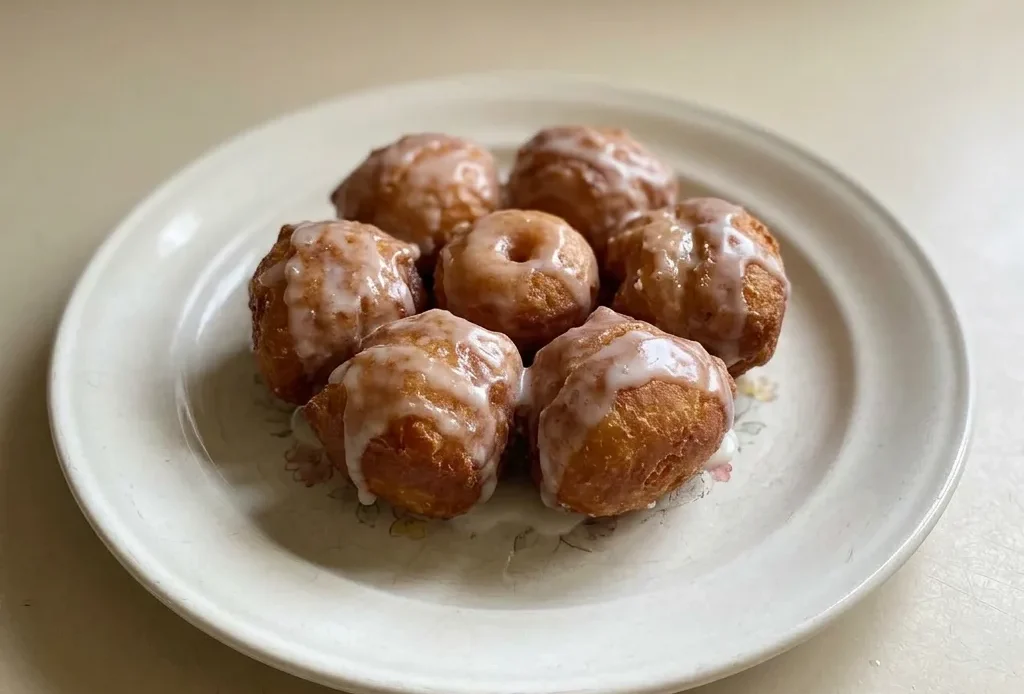
A pale, puffy ring that feels almost marshmallow-light when you pick it up, that’s what potato dough delivers. The crumb stays tender for days, not because of extra fat, but because boiled russets trap moisture in a way flour alone can’t. These potato donuts taste like the best yeast donut you’ve had, only softer, with a faint warmth from mace and nutmeg that never shouts.
They’re forgiving to shape, but the window between under-risen and over-proofed is narrower than with standard dough, worth paying attention to.
Make the most of mashed potatoes for tender crumb
Boiled russets bring two things to the dough: moisture and starch. The moisture keeps the crumb soft; the starch bonds with flour proteins to create a fine, tender structure rather than a dense one.
Using the reserved potato water instead of plain water reinforces that potato character and adds even more starch for hydration. Smooth mash is key, any lump disrupts the dough’s uniformity, leaving dry spots or uneven texture.
Run the cooked potatoes through a food mill or mash until completely smooth before measuring. That 3/4 cup of mash replaces some of the fat and liquid you’d find in a standard enriched dough, but the result is lighter, not heavier. You’ll feel the difference when you bite in: a moist, almost soft interior that still holds its shape.
Spice the dough with mace and nutmeg for warmth
Mace and nutmeg come from the same fruit, but they taste different. Mace is milder, with a peppery floral note; nutmeg is sweeter and more pungent. Together they deepen the earthy sweetness of the potatoes without shouting.
Half a teaspoon of mace and a pinch of nutmeg is all it takes, go heavier and the spices will dominate the delicate potato flavor. These aren’t cinnamon-sugar donuts.
The spices here work as a subtle backdrop, making the potato taste more like itself, just warmer and more aromatic. You’ll notice the difference when you smell the dough rising: a gentle, spiced fragrance that promises something beyond plain yeast donuts.
Give the potato dough enough time to rise
Potato dough is heavier than a standard yeast dough because the mash adds weight without much gluten structure. That means it needs more time to puff up, plan on a full hour for the first rise and another 45 minutes to an hour after cutting.
The extra time lets yeast produce enough gas to lift that dense base, creating air pockets throughout. Rushing it yields a tight, bready crumb.
And when you transfer the cut donuts to the oil, use the parchment squares. Lifting them by hand would deflate the tender dough; sliding the paper lets the donut drop in gently, preserving the rise you waited for.
Glaze warm donuts for a smooth, crack-free coating
A thin glaze made with whole milk, powdered sugar, and vanilla sets best when applied to warm donuts straight from the fryer. The heat thins the glaze just enough to spread evenly without pooling, then helps it dry quickly into a smooth, non-brittle shell. Too cool and the glaze thickens and drags; too thick a mixture and it cracks as it sets.
The ratio here, 1/4 cup milk to 2 cups sugar, gives a just-pourable consistency that clings to the surface without running off. Rest the glazed donuts on a wire rack so excess drips away and air circulates underneath, preventing a soggy bottom. Within ten minutes you’ve got a glossy finish that snaps when you bite.
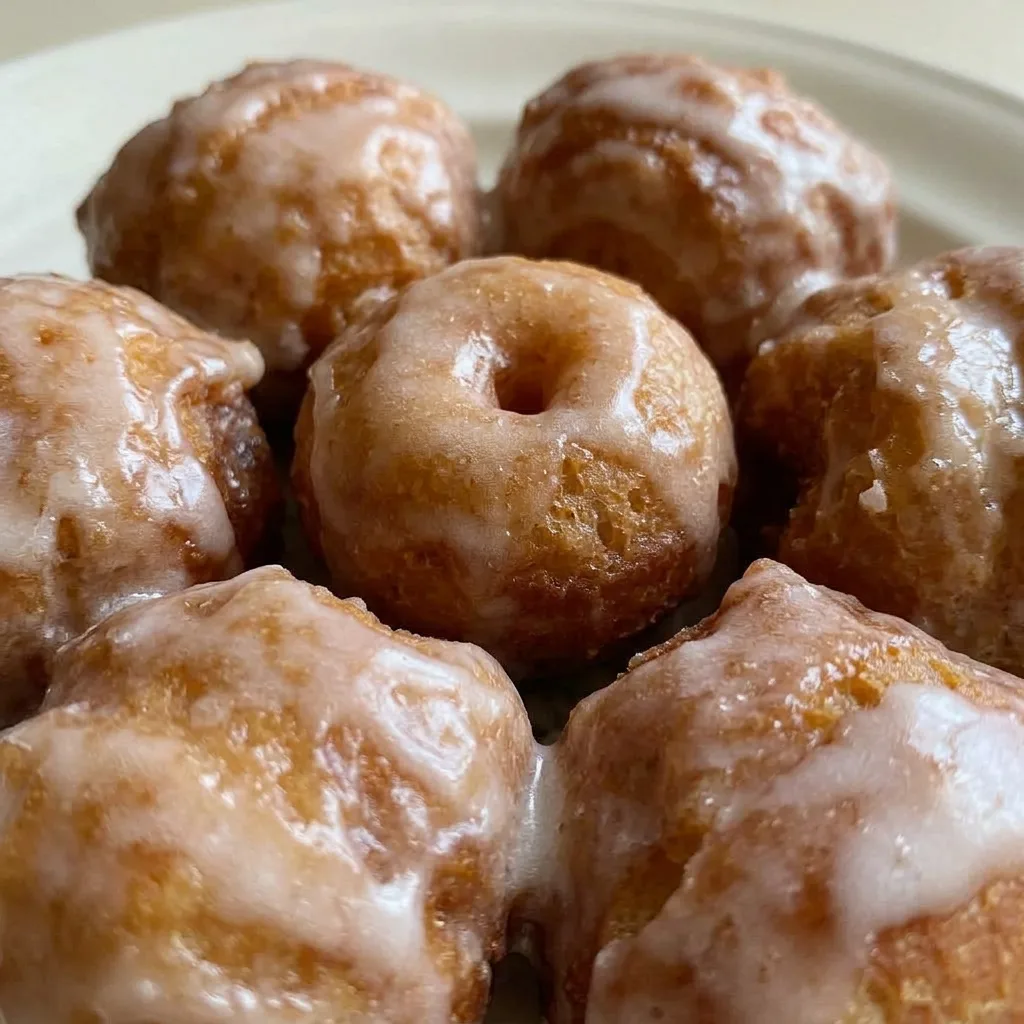
Prep: 30 min · Cook: 15 min · Total: 2 hr 45 min · Servings: 12 · Calories: 270 kcal
Ingredient Notes for Potato Donuts
Russet potatoes: Boil until fork-tender and mash smooth; lumps cause dry spots in the dough.
Potato cooking water: Reserve it; this starchy liquid replaces plain water to boost hydration and tenderness.
Active dry yeast: Bloom in 2 tablespoons of warm potato water at 100 to 120°F until foamy, about 5 minutes.
Mace and nutmeg: Use half a teaspoon mace and a pinch nutmeg; too much masks the potato flavor.
All-purpose flour: Add gradually during kneading; the dough should pull from the bowl and feel elastic.
Vegetable oil: Heat to 375°F for frying; oil too cool makes greasy donuts, too hot burns the exterior.
Fry the donuts at the right temperature for a crisp exterior and fluffy interior
Boil and mash potatoes
Boil the quartered potatoes until a fork slides through easily, about 12 minutes. Drain, reserving the water. Mash until no lumps remain, rub a bit to the touch to check.
Lumpy mash gives uneven dough.
Mix dough
Combine 3/4 cup mash, 1/2 cup flour, and the egg. The mixture looks shaggy, that’s fine. Warm the reserved potato water with sugar, butter, and salt until the butter melts, then bloom the yeast in 2 tablespoons of warm potato water.
Knead dough
Add the butter mixture, bloomed yeast, and spices to the bowl. Gradually add the remaining flour. The dough should pull away from the bowl and feel smooth and elastic after 5 to 10 minutes of kneading, it should spring back when poked.
First rise
Place the dough in a greased bowl, cover, and let rise until doubled, about 1 hour. The dough feels airy and doesn’t spring back quickly when poked. If it’s still dense, give it another 15 minutes.
Cut and second rise
Roll the dough to 1/2-inch thick. Cut with a floured cutter and place each donut on a parchment square. Cover and let rise until doubled again, 45 minutes to 1 hour.
The donuts look puffy and feel light when lifted.
Fry donuts
Heat 2 inches of oil to 375°F. Slide a donut off its parchment into the oil, it should sizzle immediately and float.
Fry 2 to 3 minutes, flipping once, until golden brown. If it browns too fast, lower the heat; if it’s pale, raise it.
Glaze donuts
Warm the milk, then whisk in powdered sugar and vanilla. Dip the warm donuts, the glaze should coat smoothly without pooling. Let set on a wire rack until the glaze hardens, about 5 to 10 minutes.
It will be glossy and firm to the touch.

Potato Donuts
Ingredients
Method
Boil potato quarters:
Cut the potatoes into quarters and put them in a saucepan. Add cold water to cover and bring to a boil over medium heat. Cook for 10-15 minutes until soft. Drain, saving the potato water.Mash and measure potato:
Put the potatoes through a food mill or mash manually until completely smooth. Spoon out 3/4 cup of mashed potato into the bowl of a stand mixer. Use or discard the remainder.Mix potato, flour, egg:
To the mashed potato, add 1/2 cup (60 g) of the flour and the egg. Blend with the dough hook until barely combined.Warm potato water mixture:
In a small saucepan, warm 3/4 cup of the reserved potato water together with the sugar, butter, and salt over low heat until the butter liquefies.Bloom yeast in water:
While the butter melts, combine 2 tablespoons of warm potato water (100-120°F (50°C) / 38-49°C) with the yeast in a small bowl. Allow to sit for 5 minutes until foamy.Combine mixtures with yeast:
Pour the potato water-butter mixture into the mixer bowl, then add the bloomed yeast, mace, and nutmeg.Knead dough until elastic:
Set the mixer to low speed and incorporate the remaining flour in 1/2 cup (60 g) increments until a stiff dough forms that pulls away from the bowl sides. Knead for 5-10 minutes until smooth and elastic.First rise until doubled:
Move the dough to a greased bowl, cover, and let it rise in a warm place (e.g., oven with light on) until doubled in size, about 1 hour.Roll dough to half-inch:
Deflate the dough and turn it out onto a floured surface. Roll to 1/2-inch thickness.Cut donut shapes:
Use a floured biscuit or donut cutter to cut out shapes. Arrange the cut donuts on small squares of parchment paper (3-4 inches each) placed on lightly floured baking sheets. This avoids deflating during transfer.Second rise until doubled:
Cover the baking sheets with a tea towel or put them in a turned-off oven and let rise until doubled, about 45 minutes to 1 hour.Heat oil to 375°F:
Pour 2 inches of vegetable oil into a deep skillet or pot and heat to 375°F (190°C).Fry donuts until golden:
Carefully slide the donuts off the parchment into the hot oil. Fry in batches without crowding, turning as needed, until golden on both sides, about 2-3 minutes.Cool donuts on towels:
Let the donuts cool on a plate lined with paper towels until they are cool enough to handle.
Make vanilla glaze:
For the glaze: warm the milk in a small saucepan until hot. Take off the heat and mix in the powdered sugar and vanilla. Whisk until smooth.Glaze and set donuts:
Set a wire rack over a sheet pan. Dip the warm donuts into the glaze and place on the rack. Allow to set for 5-10 minutes until the glaze hardens. Serve right away.
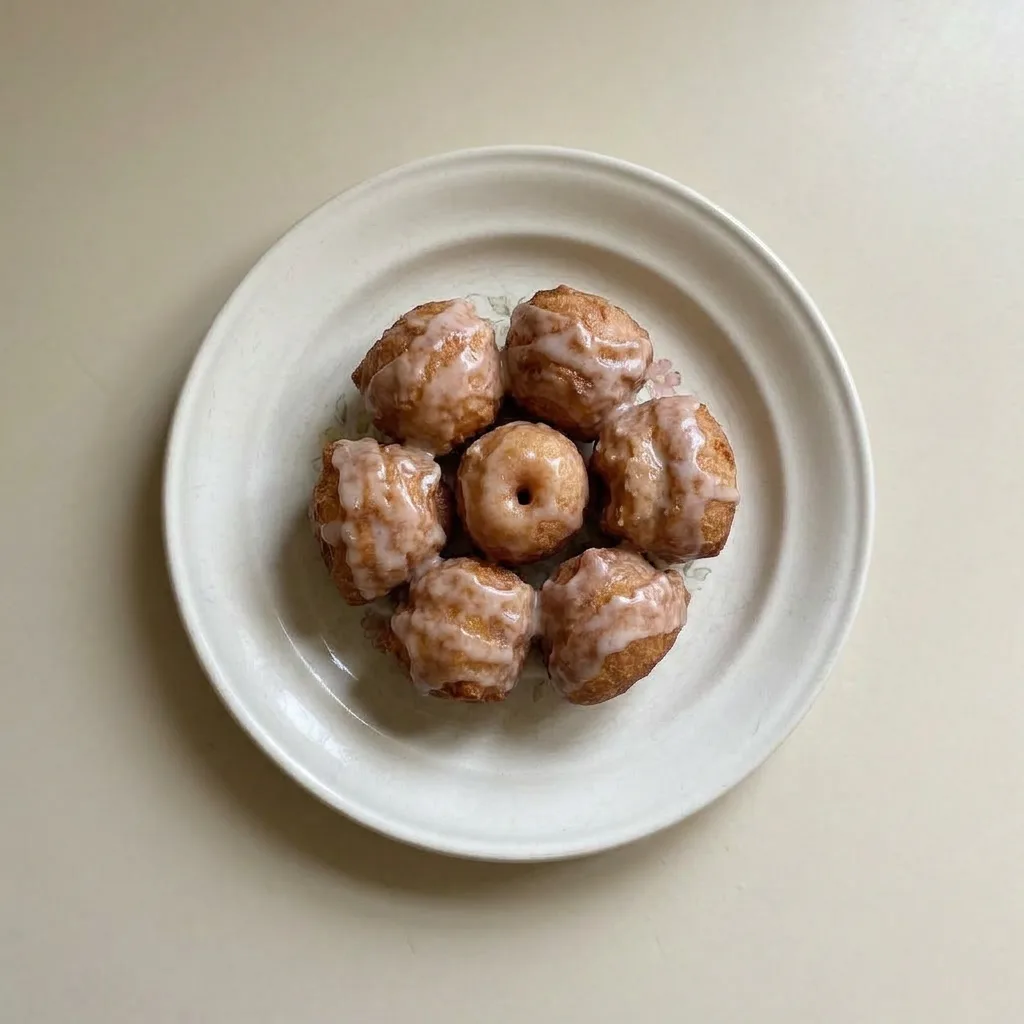
Swap the potato, the spice, and the dairy without wrecking the crumb
Russet potatoes: Sweet potato (same amount, mashed smooth). Sweet potato adds more moisture and natural sugar, so the dough feels stickier during kneading and the donuts brown faster in the oil. The crumb stays tender but tastes distinctly sweeter and earthier, less neutral than russet.
Mace: Allspice (same amount). Allspice is warmer and more assertive than mace.
It shifts the spice profile from floral-peppery toward clove-cinnamon territory. The donuts still taste good, but the background warmth becomes more forward, so consider reducing to 1/4 teaspoon first.
Whole milk (in glaze): Buttermilk (same amount). Buttermilk adds tang that cuts the sweetness of the glaze. The glaze thickens slightly faster because buttermilk is more acidic, so you may need to thin it with a teaspoon more milk if it becomes too stiff to dip.
The finish stays glossy but tastes less sugary, more balanced.
All-purpose flour: Gluten-free 1-to-1 flour blend (same amount by weight). Gluten-free dough is stickier and less elastic; it won’t pull away from the bowl as cleanly.
The donuts will be more delicate and may spread more during frying. Expect a slightly denser, more cake-like crumb rather than the airy interior of the wheat version. Handle with extra care when cutting and transferring.
Tips
- Check oil temperature by dropping a small piece of dough; it should sizzle and rise immediately without burning. If it sinks and sits, the oil is too cool; if it browns in 30 seconds, it’s too hot.
Storage and Serving
Potato donuts are best within a few hours of glazing. The glaze stays glossy and the interior remains tender and moist. After a day at room temperature, the texture stiffens and the glaze may crack.
Store glazed donuts in a single layer in an airtight container at room temperature for up to 1 day. Do not refrigerate; the cold dries them out and hardens the crumb. To reheat, warm in a 350°F oven for 5 minutes, but expect the glaze to lose its snap.
Freezing is not recommended: the glaze becomes sticky and the dough turns gummy upon thawing. If you must freeze, freeze unglazed donuts in a single layer on a baking sheet, then transfer to a freezer bag for up to 1 month.
Thaw at room temperature, then rewarm in a 350°F oven for 5 minutes before glazing and serving immediately.
Frequently Asked Questions
Can I make the dough the night before and fry the donuts the next day?
You can, but expect a denser crumb. After the first rise, punch down the dough, wrap it tightly, and refrigerate overnight. The next day, let it come to room temperature for about 30 minutes before rolling and cutting, cold dough is stiff and harder to shape.
5 hours, because the yeast is sluggish from the cold. The texture won’t be as airy as same-day donuts, but the flavor deepens slightly.
Why did my donuts turn out dense and heavy instead of light and fluffy?
Most likely the dough didn’t rise enough. Potato dough is heavier than standard yeast dough and needs the full 1-hour first rise and another 45 to 60 minutes after cutting, both until doubled. If you rushed either rise, the yeast didn’t produce enough gas to lift the mash.
Another cause: the oil was too cool, below 375°F, so the donuts absorbed fat instead of puffing quickly. Check the oil with a scrap of dough; it should sizzle and float immediately.
How do I know when the oil is at the right temperature without a thermometer?
Drop a 1-inch cube of bread into the oil. If it browns evenly in 60 seconds, the oil is around 375°F. Too fast, under 45 seconds, means it’s too hot; slower than 90 seconds means too cool.
Also watch the donut itself: when you slide it in, it should sizzle vigorously and float to the surface within 5 seconds. If it sinks and sits on the bottom, the oil isn’t hot enough.
Are these donuts similar to traditional yeast donuts, or do they taste very different?
They’re similar in texture, light, airy, with a yeasty tang, but the potato makes the crumb noticeably moister and more tender than a standard enriched dough. The flavor is subtly earthy from the potato and spiced with mace and nutmeg, not the typical cinnamon or vanilla. The glaze is the same sweet finish, so the biggest difference is the interior: softer, almost soft, and less greasy than a classic yeast donut.
